For all the conversations I’ve engaged with exploring differing facets of love, and the snippets of thought I’ve put on to paper, rarely have I dedicated the time and space to delve more deeply into love through the written word. There are many contributing factors to this, some practical and others that invite more reflection. To the extent that the essence of love, in the fact of its existence, is something that exceeds any constellation of words that might attempt to capture it, perhaps I find myself hesitant to try to put words to the experience or expression of love I seek to live into. To the extent that change is the only constant, and any given orientation toward love unfolds and shifts over time, perhaps I find myself hesitant to capture the essence of a moment that is fleeting. In all these hesitations, I reflect on the teachers in my life that have offered guidance in the ways in which I understand and orient toward love. I reflect on the poets, artists, and wise persons whose works capture the ineffable and the vastness of a single moment. I reflect, too, on my own experience of love as a spiritual essence and guide, emergent most strongly through the co-cultivation of relationship with others. Honoring all of these elements, and moving into a space of compassionate inquiry within myself, I dedicate myself to practice, to exploring into the unfolding of love, what it is to love, to be loved, and to be love.
In speaking into the ways in which I orient toward love, I
notice myself drawing upon ways in which others have defined this most powerful
essence of life. Recently in conversation with a dear friend, I felt into my
body as he expressed his own experience of love and most specifically in the
moments where he was clear in his intention to not define what love is, but
rather reflect on its presence in his life. I so deeply appreciated this way in
which he spoke into this. It resonated profoundly and elicited this very
reflection, to explore more deeply not how I might align with a given definition
of love, and instead to explore the way I experience its emergence within me
and beyond me.
My love for love unfolded in the recognition of its
revolutionary, radical, and subversive power, which emerged through my yoga
practice. I can remember the specific moment where this all coalesced, where
the realization power of love for justice came most fully into my consciousness.
This moment arose several years after my practice began, but my path in yoga
has always been one of the heart.
I first arrived at
my yoga practice because of my heart, my physical heart. It was hurting,
neglected and abused. I deprived myself of nourishment to the point that my
heart suffered, as my body began to pull nutrients from my muscles and organs
to survive. In recovery, I began practicing yoga as a way to move my body
without overburdening my heart. Unknowingly, from the very beginning I have had
a heart-centered practice. Since that time, I have come to understand, more so,
I have felt my way to the understanding that yoga is all about the heart. Not
the physical heart necessarily, but that which the heart holds and represents –
love. My practice now is one of heart, of love, of agape – the unlimited kind
of love that sees no exception, a love of and for all from the smallest
individual to the largest community. It is a soul connection love, one that
honors every being as deeply connected and as inherently and equally valuable
just as they are. It is a love of radical healing and wholeness.
In a conversation
about love with one of my beloved teachers, she shared with me these words of
Dr. Martin
Luther King, Jr., “Power
without love is reckless and abusive, and love without power is sentimental and
anemic. Power at its best is love implementing the demands of justice, and
justice at its best is power correcting everything that stands against love.” These
words shook my body, reverberating through every cell. The expression of my spiritual
practice through yoga found alignment with my engagement in personal and social
transformation.
The guiding
questions in the field of peace and justice are simple, for all the immense complexity
they hold. How do we live peacefully? How do we move toward and enact justice?
How do we heal? How do we remember our wholeness, as individuals, communities,
and with the world? How do we create a world in which the truth of everyone’s
belonging is realized? For each of these questions, love offers an answer. Love
in action is the commitment to and realization of fierce belonging. Love is the
remembrance of our wholeness, individually and collectively. Love is the
essence that permeates spaces of perceived separation and fragmentation, the
force of healing in its truest sense of becoming whole. As Dr. Cornel West
says, “justice is what love looks like in public.” Love is the guiding
intention that allows for the navigation of relationship in a compassionate and
transformative way.
With love as a compass and a destination, this does not deny accountability and critical engagement in the way in which we are present and the way in which we support others to be present in the work of justice and liberation. Rather, it supports a more full and compassionate commitment to the realization of justice, as it is an act of love to support oneself and others in acting, speaking, and being in a way that upholds the dignity of all beings. This is a practice of radical presence, of awareness of ourselves situated across time and space, situated a vast and ever changing array of relationships. It is in this way that we find, generous presence is love embodied.
“Perhaps the art of harvesting the secret riches of our lives is best achieved when we place profound trust in the act of beginning. Risk might be our greatest ally. To live a truly creative life, we always need to cast a critical look at where we presently are, attempting always to discern where we have become stagnant and where new beginning might be ripening. There can be no growth if we do not remain open and vulnerable to what is new and different. I have never seen anyone take a risk for growth that was not rewarded a thousand times over.”
~ John O’Donohue
This weekend is my second to last weekend in San Diego before
leaving for Northern Ireland to live for a year as an intern with the
Corrymeela Community, Northern Ireland’s oldest center for peace and reconciliation.
The past few weeks, I’ve been enjoying nourishing time with friends,
opportunities to connect and say goodbye for now. In addition to seeing people
before leaving, I am also wanting to visit significant places. Humans are place-based
creatures, though modern society all too often draws us away from this
remembrance. Thus, in this liminal period of transition, I have made it a
practice to be more intentional about the ways I inhabit the spaces and places in
which I find myself.
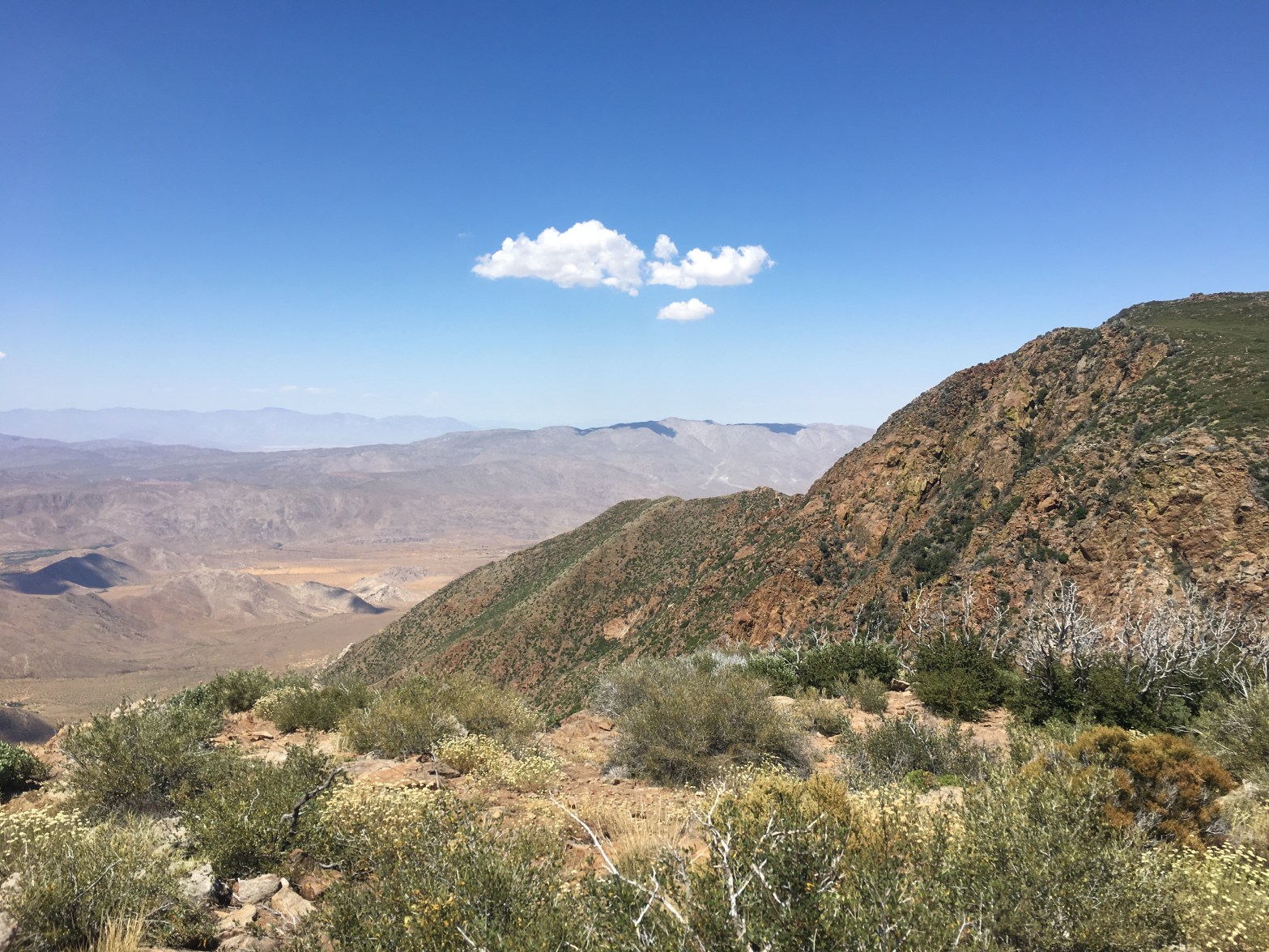
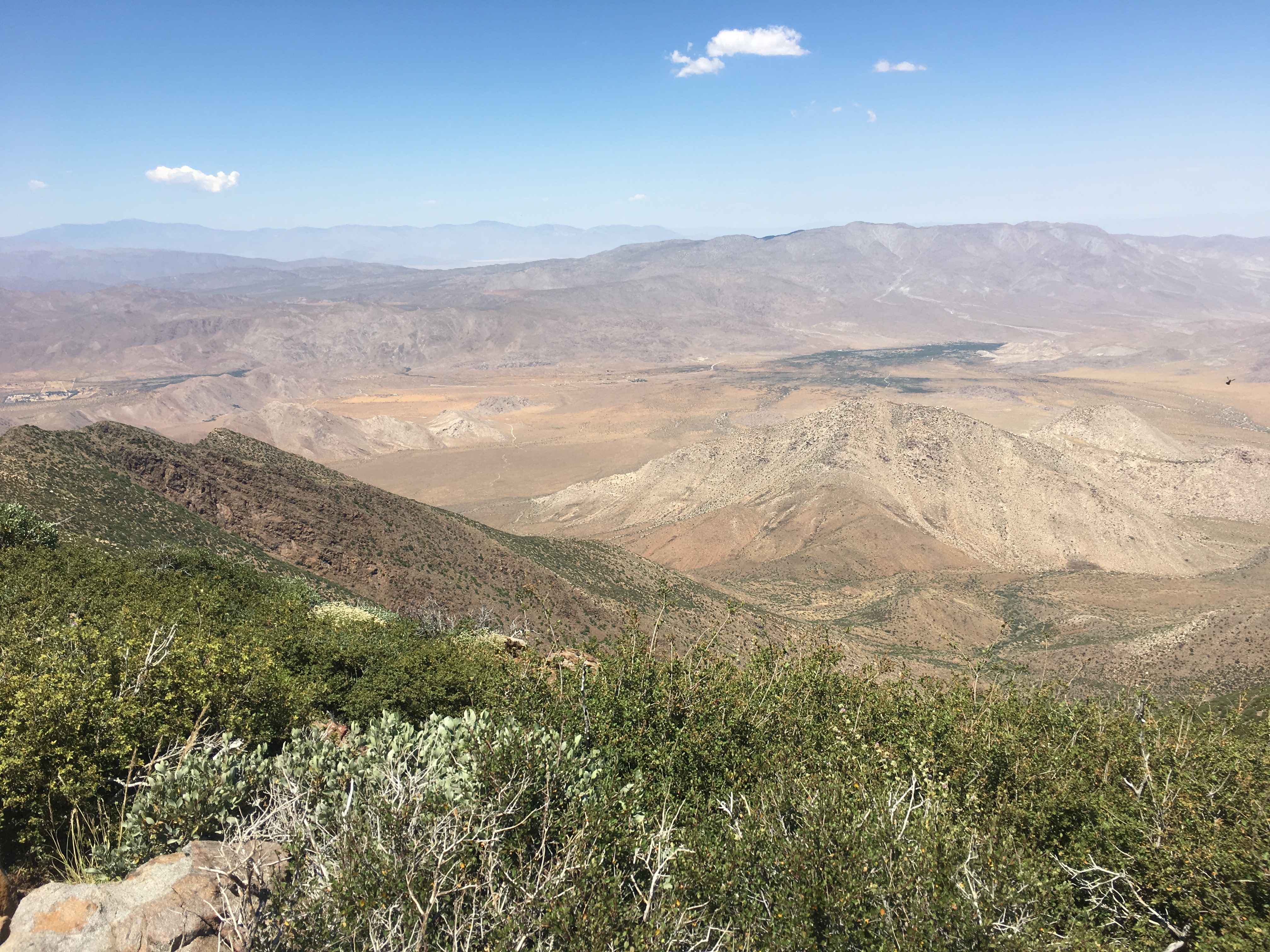
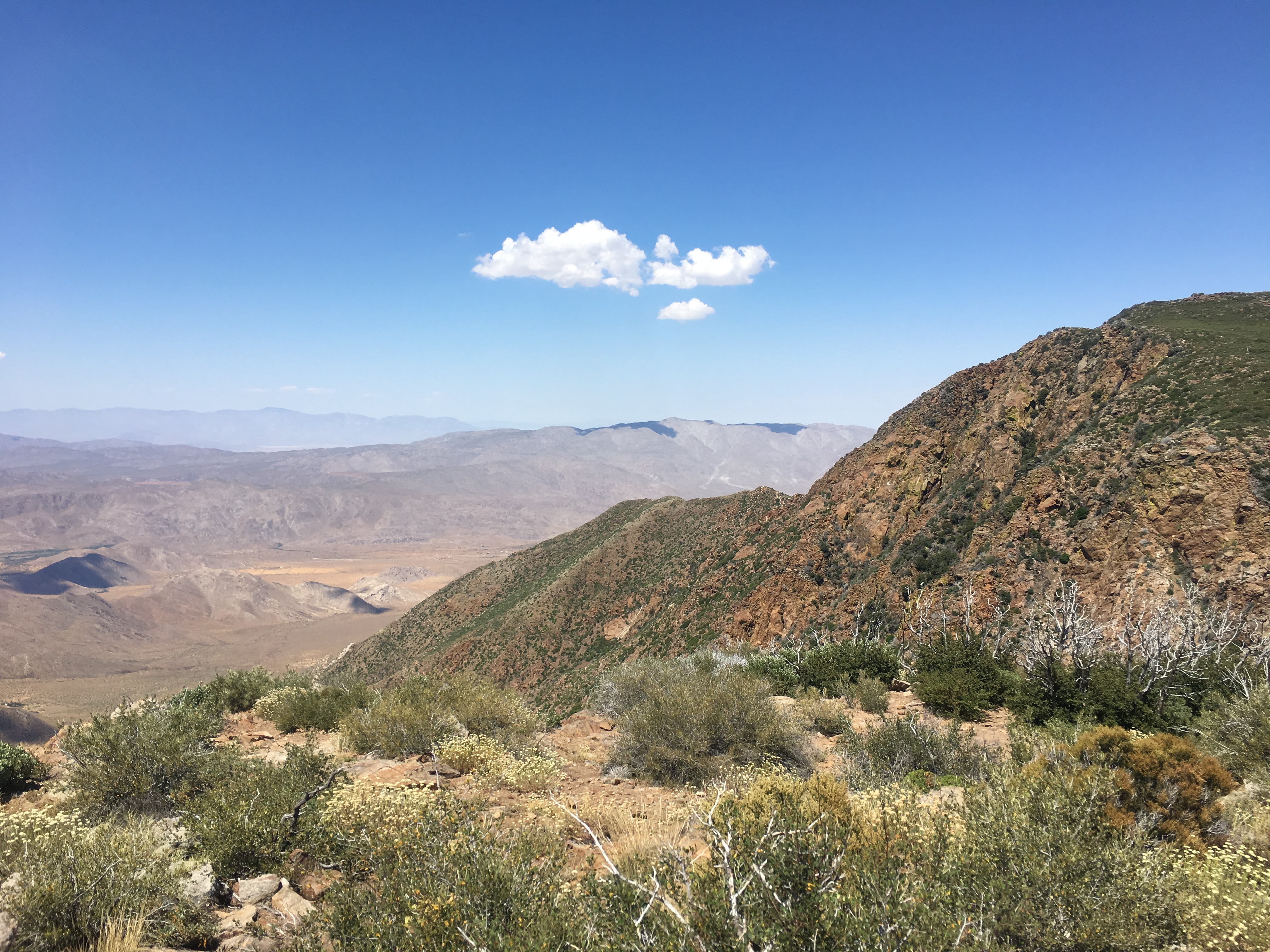
A significant place for me here, though not one I have too often frequented while living in San Diego, is Mount Laguna. It is a majestic and magnificent place, with trails that meander through meadows and groves of pine trees, and skirt mountainsides overlooking the Anza-Borrego desert. I felt very drawn to visit Mount Laguna before my departure in less than two weeks’ time, with the desire to hike a specific trail that has been on my mind for months.
Setting off on the trail, I breathed deep, enjoying the warm
mountain air. I paused frequently to appreciate the beauty of the environment
around me, wanting to be as present as possible on this last opportunity I will
have to walk the trail for some time. I also found myself curious about the
thoughts passing through my mind: songs new and old, elements of a yoga
sequence I’ll be sharing this week, and reflections on significant
conversations that have taken place over the past several days – an interesting
array to watch unfold.
A thread of conversation that has been especially strong, necessarily so, has been that of love. More specifically, reflecting on and living into revolutionary love, a transcendent force that permeates all beings and all things, by which we are all connected and is the only constant amidst the everchanging nature of our lived reality. In this time of transition, I’ve been resting into reflection on what is temporary and what is constant, perceived or actual. Cherishing significant relationships that have been co-created and co-cultivated in the past months and years, I’m curious as to what elements of relationship will remain and what elements of relationship will transform. Knowing that change is inevitable, I center myself into the gratitude for what has been and an openness to what will be. In this process, connecting intentionally with the essence of love provides a deep nourishment as well as guiding force to propel me further in service of peace, justice, healing, and transformation.
Continuing along, I passed through familiar and unfamiliar portions of the trail until eventually I found myself on the east side of the mountain, taking moments in movement and stillness with my gaze stretching across the vast expanse of Anza-Borrego. Stopping at outlooks on the trail, I breathed in the landscape, feeling myself a part of the vastness that unfolded before me. As I traversed this portion of the trail, a part of the Pacific Crest Trail no less, a new thought came to inhabit my mind. I reflected on John O’Donohue’s passage written above, in relationship with how strong my desire was to walk this trail at this time. It struck me how the place of the trail so perfectly captured the current space of my life. I am preparing to move across the world, to live, learn, work in the beautiful community of practice that is Corrymeela. It is a new beginning, filled with unknowns. At this moment in my life, I am moving along an edge with my gaze cast eastward, eager to experience all that which will come. I am simultaneously immensely grateful for the grounding I feel in the nourishing relationships in which I share in San Diego.
What I thought would be a visit to a place I love came to be so much more. Feeling the threads of reflection from the week weave together, I was held not only in mountain landscape, but also in the continuing support of deeply loving and caring relationship. In the silence and spaciousness of the mountain, I was able to experience grounding in this moment of transition simultaneously from the inside out and from the outside in.
In the fall of 2018, my dear friend Julie invited me to join a 30-day gratitude practice, connecting with four other women to everyday share three things for which we are grateful in a group text. I greatly enjoyed the practice, as it offered an opportunity to reflect more intentionally on the interactions and activities of my day. Over just a short time, I noticed myself resting more frequently into gratitude and being present to all that I have to be grateful for. Of the five other women sharing their daily gratitudes, I only knew Julie. The others live around the country. While not knowing these women in person, it was lovely to connect in shared practice, to learn about who they are and what they value through what they chose for their three daily gratitudes.
The thirty days passed, and Julie invited us to continue for
another 45 days, which I happily did. Then came the new year and a I received a
message Julie sent to our group, offering the invitation to join in 365 days of
gratitude. Never before had I consciously committed to a yearlong daily
practice, but having already established a rhythm of practice in the preceding
months, it was an easeful yes to embark upon this journey.
Writing this, we are nearing the 180 day mark of gratitudes.
The initial insights and shifts that unfolded from the first thirty days have
sustained. The ways in which I orient toward the goings on of my life have
shifted substantially, as I rest more fully into gratitude each day. Gratitude
has become a space almost to which I default, resting into the gifts of the
moment, even when those gifts are situated in times or spaces of anxiety,
challenge, and overwhelm. There is another gift this daily gratitude practice has
offered, however, one for which I am deeply grateful and on which I have come
to reflect very frequently.
In reflecting each evening on the happenings of the day and
choosing three things I am grateful for, I began to notice patterns in my
gratitude notes. Consistently, one if not all three of my gratitudes is centered
on relationship. It is that conversation I had with someone, a friend’s
presence in my life, the support someone has provided in a moment of need, or
the opportunity to support someone when they are in need. This has led me to
reflect upon that which I value most in my life, and that which is most
nourishing, namely centering relationship. I now carry a different quality of
awareness with regard to the ways in which I share in and inhabit relationships
in my life. With a deeper and more conscious appreciation for the sustaining
force these relationships carry, I have also been provided with a
directionality in terms of what I can move toward when I am feeling
disconnected, anxious, and otherwise unwell. Knowing what nourishes me, I find
myself being more intentional about cultivating and being deeply present to
existing and emerging relationships. Sometimes it is just a momentary crossing
of paths, a smile in the hallway. Other times, it is an hours long conversation
that traverses vast landscapes of thought and reflection. Each of these
embodiments of relationship carries such value, offering the opportunity of engaged
presence, of seeing and being seen, of listening and being heard, of sensing
and being sensed.
Continuing to navigate this year of gratitude, I have received a gift I did not anticipate, but has been so deeply transformative. I know now what nourishes me. Further, I know what nourishes me is the people with whom I am in relationship. Every evening, I receive the gift of resting into gratitude to and for the people in my life who challenge me, who support me, and who sustain me.
May we all know that for which we are grateful, and may we all have the opportunity to cultivate its presence in our daily practice.
Below is an excerpt from my master’s capstone project, “Embodying the Moral Imagination: A Theoretical and Pedagogical Framework Exploring the Value of Practices of Embodiment in the Education of Peace Practitioners.”
Peacebuilding, at its essence, is
about relationship. The practice of peace is to support generative
relationships that allow for individual and collective thriving, and to support
in the transformation of relationships that inhibit this experience. A conflictual
relationship is one characterized by dissonance, whereas a peaceful
relationship is one of harmony. Harmony does not necessitate sameness. In fact,
it only arises through the resonance of varying frequencies. While certainly
harmony and dissonance are sonic experiences, so too are they felt in and
through the body. As the body is that which mediates our experience of the
world, it is that through which we experience violence, conflict, and peace
(Acarón, 2016). To the extent that peacebuilding necessitates a facility in
navigating various landscapes of conflict, presence to these landscapes and the
movement of the body through them is of great value. To this end, attending to
the symphony of sensations and experiences that emanate from within and impact
the body offers a way to attune the vehicle of the body to and through the
navigation of conflict landscapes (see
Figure 1 for an illustration of conflict landscapes).
Despite this value of embodied
presence, little attention is paid to nurturing embodied self-awareness[1]
and exploring the possibilities of practices of embodiment in peace education. With regard to the relationship between practices of
embodiment and peacebuilding, there is precedent of this integration in both
theory and practice (Acarón Rios, 2016; Acarón, 2018; Alexander & LeBaron,
2013; Beausoleil & LeBaron, 2013; Deer, 2000; Eddy, 2002; Eddy, 2016;
Jeffrey, 2017; LeBaron, MacLeod, & Acland, 2013). Even so, the
literature pertaining to practices of embodiment in peacebuilding is, as yet,
fairly limited and far from mainstream. More extensive literatures exist with
regard to the role of emotion in decision making and conflict resolution, the
value of creative and arts-based approaches to peacebuilding, the potency of
embodied practices for healing, and embodied pedagogies in education. Through
an interdisciplinary approach, drawing from the existent literature, I seek to
address the following question: How do practices of
embodiment inform and deepen our understanding of established disciplines of
peacebuilding and enhance the capacity of peace practitioners to navigate conflict
landscapes?
Prior to mapping out how I will
explore this question, it is necessary to provide clarification about its
constituent elements by offering working definitions for the terms employed.
Embodiment is a nuanced concept.
While there exist many definitions, the definition employed here is drawn from
Thomas Csordas, who offers that embodiment is “attending ‘with’ and attending
‘to’ the body” (1993, 138), therein evoking the multidimensionality of
embodiment wherein, the internal experience of sensations and emotions in the
body is not separate from the dynamics that exist beyond the boundary of the skin.
We perceive the world through the body, and cultivating attention and awareness
to the body as our vehicle of perception serves to broaden and deepen that
which we can perceive, within ourselves and in relationship with the world
around us. Yet, as Csordas observes, “although our bodies are always present,
we do not always attend to and with them” (1993, 139). In seeking avenues to
deepen the attention we pay with and to the body, specifically with the
intention to support peace practitioners in navigating geographies of conflict,
I suggest three transecting landscapes of consideration: the intrapersonal
(one’s relationship with oneself), the interpersonal (one’s relationship with
other people), and the external (one’s relationship with the space one
inhabits).[2]
The term “practices of embodiment”
refers to practices that are guided with attention with and to the body. To
this end, such practices are not about the form, but rather the quality and
direction of attention they invite.[3]
In other words, these practices are contingent upon the ‘how’ rather than the
‘what.’ For example, breathing can be a practice of embodiment if, when
breathing, you draw attention to the texture of the air in your throat, the shape
change of your body as the air fills your lungs, or the way in which a slow and
steady exhalation can soothe and ground you.
For the purposes of
this exploration, the disciplines and practices of peacebuilding that will be
engaged are those articulated by John Paul Lederach in his book The Moral Imagination: The Art and Soul of
Peacebuilding (2005). This text emerges from Lederach’s decades of
experience in the field supporting the work of peacebuilding. He explores the
question of how we might transcend cycles of violence that grip the human
community, even while remaining embedded within them. The capacity to transcend
violence, he offers, lies in the generation, mobilization, and building of the
moral imagination (2005, 5). The four disciplines of the moral imagination are:
“the capacity to
imagine ourselves in a web of relationships that includes our enemies; the
ability to sustain a paradoxical curiosity that embraces complexity without
reliance on dualistic polarity; the fundamental belief in and pursuit of the
creative act; and the acceptance of the inherent risk of stepping into the
mystery of the unknown that lies beyond the far too familiar landscape of
violence” (2005, 5).
In the writing of
this framework, I strive to embody the elements of these disciplines.
Accordingly, this framework is predicated upon an understanding of the web of relationships we carry within
ourselves (the interconnection of body, mind, and spirit) and the web of
relationships we inhabit that connects all people and all things. Through both
an exploration of practices of embodiment as they support peace practitioners
and the elaboration of a pedagogical framework in which such practices can be
engaged, I consider ways we may practice paradoxical
curiosity to transcend restrictive dualism of mind/body, self/other, and
beyond. With an acknowledgment of the relative absence of embodied practice in
graduate level peace education, this framework itself is a creative act, encouraging a new way of imagining peace education. In
this light, I acknowledge there may be some risk
in offering the possibility a different paradigm that invites us to explore
alternative domains of learning, integrating body and mind.
In the theoretical
framework laid out in the following chapters, I will explore the value of
practices of embodiment for peace practitioners as they support a navigation of
these three interrelated landscapes mentioned above: intrapersonal,
interpersonal, and external. For each of these landscapes, practices of
embodiment support peace practitioners by respectively deepening and broadening
internal awareness, enhancing relational skills, and illuminating social and
structural dynamics. Thus, my thesis holds that practices of embodiment support
peace practitioners by nurturing deep presence, enhancing self-awareness, and cultivating
intentionality relative to oneself, others, and the spaces we inhabit.
Figure 1. Landscapes of Conflict
Beginning with an
exploration of the intrapersonal landscape, such practices support peace
practitioners not only in the intensity of a conflictual moment, but also
promote resilience and longevity. Practices of embodiment increase interoceptive
capacity, a connection to the felt sense in the ability to feel what is arising
internally for an individual as well as the ability to perceive what is arising
for others. Such attunement and perception strengthen our intuitive sense,
which enables peace practitioners to pick up on subtleties in a conflict
dynamic that may hold the seeds for the conflict’s transformation. Practices of
embodiment enhance our capacity for self-regulation, an essential skill in the
navigation of the complex domains of conflict, violence, and injustice (Eddy,
2016). Practices of embodiment can also support healing and the processing of
emotion. For peace practitioners who may be drawn to this work resultant from
past experiences of trauma and who are likely to encounter potentially
traumatic experiences during the course of our careers, engaging in practices
that can support such healing is invaluable. Similarly, practices of embodiment
can support the longevity and sustainability of peace practitioners, as such
practices can increase resiliency through enhancing skills of self-regulation
and providing avenues through which to process intense emotion.
From the intrapersonal landscape, we move outward to the interpersonal landscape – from relationship with oneself to relationship with others. Three primary areas of consideration in this landscape are processes of attunement and co-regulation, the cultivation of kinesthetic empathy, and presence to non-verbal communication. The ability to connect authentically and presently with others is in many ways contingent upon our level of presence to ourselves. As cultivating trusting and transformative relationships is central for peace practitioners to be effective in our work, presence to our internal landscapes in relationship to others is vital. The ability to attune and connect with empathy and compassion with others is valuable not only for peace practitioners in the relationships we cultivate, but is imperative for communities affected by violence and conflict. Thus, not only are practices of embodiment that support the navigation of the interpersonal landscape beneficial for practitioners, they can also be adapted and shared as a means of building connection and relationship between individuals and groups in the peacebuilding process.
The third landscape
of consideration pertains to the external landscape we inhabit. Spatial
awareness is of great value of peace practitioners, in the way in which we
create and co-create spaces, as well as the space we hold within ourselves. Practices
of embodiment can support an exploration of the way the body inhabits physical,
social, political, and historical spaces. Integrating practices of critical
self-reflection, attention to the body offers an avenue to consider our own
positionality, the identities we hold that are expressed through our bodies.
With regard to ethical considerations for peacebuilders, and attention to the
way in which we are perceived by others relative to dynamics of power,
privilege, and oppression, is crucial. This elicits further sensitivity toward
structural violence, the impact of oppression on the body, and the histories
carried by the body, which draws on research around epigenetics and the
transgenerational transmission of trauma. Further, we are brought to reflect
upon the way in which spaces shape us and the way in which we shape the spaces
we are in, a dynamic and everchanging process (Acarón, 2016).
Practices of
embodiment, drawing attention to and with the body, thus offer myriad benefits
for peace practitioners. With regard to the ways in which such practices can
enhance and deepen understandings of established disciplines of peacebuilding,
we turn toward various pedagogical literatures, and most specifically
approaches of experiential education. As shared by Rae Johnson:
“Scholars in experiential learning
(Boud, 1985; Kolb, 1984) assert that we learn about the world and ourselves in
an interactive, ongoing action/reflection cycle. As we encounter new
information and experiences, these interactions with the world change our view
of ourselves and our relationships to others. From an experiential perspective,
learning is a complex, holistic activity that is deeply informed by who
learners are, what they already know and believe, and how their life
experiences have influenced and affected them” (Johnson, 2014, 82).
In a future curriculum, I will offer means through which to explore disciplines of peacebuilding as set forth by John Paul Lederach in a deeply experiential way. More precisely, the disciplines of peacebuilding will be explored through practices of embodiment, as a means to bring theory into form and truly ‘Embody the Moral Imagination.’
Through the theoretical framework provided in the succeeding three chapters, I address multiple ways in which practices of embodiment can enhance the capacity of peace practitioners to navigate geographies of conflict. Moving from the intrapersonal to the external landscapes, I seek to illuminate the connections between the micro and the macro, and the ways in which attention and awareness in each landscape provide the foundation from which greater nuance and discernment can unfold. The penultimate chapter details a pedagogical approach that allows for the cultivation of these capacity enhancing practices simultaneous to a study of theory in peacebuilding. Through the map this exploration offers, we find the value of practices of embodiment lies in the ways they offer opportunities to deepen our awareness – of self, of other, of society – and harness such nuanced awareness to support a movement toward healing and peace.
[1] Alan Fogel defines embodied
self-awareness as “perceiving our movements
in relation to other people and our surroundings, registering the textures and
depths of the senses, and exploring
the intricacies of our emotions in
relation to others and the world” (2009, 10).
[2] This triadic framework elicits the
three interrelated branches of peace Toran Hansen puts forth in the article “Holistic
Peace.” These branches are: “‘peace within’ (inner peace), ‘peace between’ (relational
peace), and ‘peace among’ (structural/environmental peace)” (2016, 212).
[3] This interpretation of practices of embodiment aligns with Christine Caldwell’s notion of bodyfulness, which she differentiates from embodiment: “I would define embodiment as awareness of and attentive participation with the body’s states and actions. Bodyfulness begins when the embodied self is held in a conscious, contemplative environment, coupled with a non-judgmental engagement with bodily processes, an acceptance and appreciation of one’s bodily nature, and an ethical and aesthetic orientation towards taking right actions so that a lessening of suffering and an increase in human potential may emerge” (2014, 81).
References
Acarón, T. (2016). Shape-in(g) Space: Body, Boundaries, and Violence. Space and Culture, 19(2), 139-149. doi:10.1177/1206331215623208
Acarón, T. (2018). Movement decision-making in violence prevention and peace practices. Journal of Peace Education, 15(2), 191-215. doi:10.1080/17400201.2018.1463913
Alexander, N., & LeBaron, M. (2013). Embodied Conflict Resolution: Resurrecting Roleplay-Based Curricula Through Dance. In C. Honeyman, J. Coben, & A. Wei-Min Lee (Eds.), Educating Negotiators for a Connected World (pp. 539-567). Saint Paul: DRI Press.
Beausoleil, E., & LeBaron, M. (2013). What Moves Us: Dance and Neuroscience Implications for Conflict Approaches. Conflict Resolution Quarterly, 31(2), 133-158. doi:doi:10.1002/crq.21086
Csordas, T. J. (1993). Somatic Modes of Attention. Cultural Anthropology, 8(2), 135-156.
Deer, P. I. (2000). The Body As Peace: Somatic Practice for Transforming Conflict. (Doctor of Philosophy in Conflict Resolution & Somatics Dissertation), The Union Institute Graduate School, Ann Arbor, MI.
Eddy, M. (2002). Body Cues and Conflict: LMA-Derived Approaches to Educational Violence Prevention. Movement News of Laban Institute of Movement Studies.
Eddy, M. (2016). Dancing Solutions to Conflict: Field-Tested Somatic Dance for Peace. Journal of Dance Education, 16(3), 99-111.
Jeffrey, E. R. (2017). Dance in Peacebuilding: Space, Relationships, and Embodied Interactions. (Doctor of Philosophy), Queensland University of Technology.
Johnson, R. (2015). Grasping and Transforming the Embodied Experience of Oppression. International Body Psychotherapy Journal, 14(1), 80-95.
Lederach, J. P. (2005). The Moral Imagination: The Art and Soul of Building Peace. New York, New York: Oxford University Press.
The Choreography of Resolution:
Conflict, Movement, and Neuroscience.
(2013). (M. LeBaron, C. MacLeod, &
A. F. Acland Eds.). Chicago, IL: American Bar Association.


 Embody Peacebuilding