On Care: In Resistance and Refinement

To practice into care is to practice into paradox. Even as this practice embodies a remembrance of our inherent interconnection, so too does it elicit a confrontation with our edges. And in these murky spaces between connection and boundary, I find myself wading in inquiry. The questions are many, however two are feeling particularly sticky for me this week:

How do we navigate encounters with resistance to care we may extend?

How do we grapple with the ways in which our care is imperfect?

These questions feel alive as I reflect on my experiences of both receiving and giving care in contexts that were anything but clear. I am writing this piece not for clarity on answers, but rather to better understand the contours of questions we will inevitably encounter in our relational lives. 


As a teenager and into my early twenties, I experienced multiple hospitalizations and endured various forms of intensive treatment for an eating disorder. At different times I experienced a constellation of hospital stays, weekly health clinic visits, intensive outpatient programs, a residential program, and regular sessions with multiple therapists. The intensity varied, however for several years, some level of treatment formed a constant in my life. There were times in which I acknowledged the need for these interventions. I could understand the risk to my health and the risk to my life that my eating disorder created (even if at times I felt ambiguous about the consequences of these risks). There were also times – when the eating disorder was strongest and thus when the level of treatment was highest – that I resisted the care that my parents and health providers were imposing.

In these moments, what I felt was anything but care. What I felt was an attack on my agency. Their perception was that my voice and choices were distorted by the eating disorder. In return, I felt that whatever I would express in terms of my physical or emotional needs was dismissed – at times partially and at times fully.

The severity of this experience varied according to the type of treatment I was receiving. I am deeply grateful to have worked with amazing therapists, a brilliant nutritionist, and to have had (and continue to receive) invaluable compassionate accompaniment from my mother. In contrast, I also experienced treatment protocols whereby I felt completely silenced – perceived and treated as a broken, self-destructive object that needed fixing.

In these extensions of care, which ranged from fierce compassion to dictatorial, there were many times I struggled and resisted. In this resistance, there was a significant difference in how I felt care and pushed through the resistance my eating disorder put forward. This difference was the felt sense of love, compassion, and humanization in how care was extended.

There were moments my resistance was met with harshness and berating. My attempts to express the raging discomfort I felt in my body were discounted. My emotional experience, my agency, my personhood – all disregarded. This led to fights, fractured relationships, sometimes even attempts to run away.

There were moments where my resistance was met with patience and compassion, a recognition of the challenges I was experiencing and a holding firm to what would support my recovery. I felt seen and held, and often the conversations that unfolded from these instances bolstered the relational fabric of care and supported the progress of my recovery. In these moments, I truly felt care, even as I was pushed beyond what felt comfortable. In fact, it was this quality of care that enabled me to do so and thus enabled my recovery.

Part of my recovery journey has entailed a recognition for the ways in which my individual experience of an eating disorder is an expression of family, cultural, and structural dynamics of hurt, harm, and injustice. Carrying this lens, scaling from the individual and relational levels to the systemic, I am brought to a recognition that in the work of justice and liberation, there will be times in which our extension of care will not be perceived or received as such. Our work toward assuring collective wellbeing – which entails a confrontation with powerful and destructive individual and collective patterns, shaping, and systems that prevail in the world we live in – will be met with resistance. There are many ways in which we can meet this resistance in the name of building a more just and dignified world. Without any of these invalidating different strategies, I find myself wondering:

  • How can we notice when our extensions of care diminish or uplift the humanity of those we are caring for?
  • What possibilities for transformation unfold if we meet resistance with fierce compassion?
  • How do we nurture the patience and build the resource to accompany and create the conditions for resistance to transform over the long term? 

During the first six months of the COVID pandemic, I moved to Paris to accompany my grandmother through the French confinements. A remarkably strong woman, up to that point she was living in her apartment alone. However, as a 99-year-old, who turned 100 one month into the pandemic, it was clear she needed additional support through the strict confinements that characterized the early COVID response in France.

In my mid-twenties at the time, I had no previous experience as a live in carer for someone in old age. But more than a carer, I was a grand-daughter who wanted to do her best to ensure the safety and wellbeing of her grandmother, to take care of her as best I could.

My grandmother was often in significant discomfort and pain. In an effort to ease her discomfort and to attend well to her needs, I took over many of the (by then diminished) tasks she would have previously done. Much of this was to do with meals. I would prepare her food, set the table, serve her, cleat the table, and do the dishes – all tasks she would have done before.

I thought this was helpful until one day she reflected something to the effect of, “Before you came, I knew where things were in the kitchen, and now I don’t remember. I used to be able to do certain things, and I can’t anymore.”

With all my good intentions to do as much as I could to care for my beloved grandmother, I ultimately diminished her agency. There are times I question the extent of the repercussions of this, how this might have contributed in certain ways to her decline. For when we cease to practice certain actions, we lose our capacity to do them. And for such an elderly person, this loss is permanent.

I wish I would have known better. Rather than do so many things for her, I wish I would have accompanied her with greater attention to providing assistance while creating conditions for her to continue moving and doing as she would have before. There were times we did this well. For example, we would prepare vegetables together to be cooked, or I would set pots and pans in place for her to be able to cook simple things without needing to lift and move objects that were heavy for her. There were many other times I defaulted to doing too much, motivated simultaneously by a desire to care fully for someone I love as well as a strong inherited tendency toward control.

It has been over two years since my grandmother passed away. I remain ever grateful for the many wonderful moments we shared during the time we lived together in the final years of her life – playing Scrabble, listening to her stories, sharing songs we loved, going for outings along the Seine (once the confinement restrictions eased). I also often experience doubt and regret for the ways in which my care was imperfect.

From this experience, I am trying learn and grow my care practice – not to strive for a perfect care, but to care in more helpful ways. Again, I wonder…

  • How can we extend care in a way that uplifts the agency and dignity of those for whom we are caring? For our care not to be of a quality of doing for, but of accompaniment?
  • How can we presence the patterns and shaping that contribute to the ways in which we care, some of which may be motivated by love and others that may be motivated by fear and control?
  • How can we approach and embody care with transparent reciprocity – to clarify needs of individuals and in relationship, and to revisit these needs for if and when they evolve?

Placing these two stories alongside one another, I am struck by the parallels. In the same way I received care through control in my mid-teens, years later, I replicated this pattern. This is a simplifying observation, as there were many counter-examples both to the care I received from my parents and to the care I extended to my grandmother. Regardless, the parallel is striking, and invites a deeper reflection into how the ways we practice care in the present are shaped by our previous experiences both giving and receiving care.

If we seek to co-create cultures of care in our relationships, our communities, or organizations, and ultimately our world, must be willing to grapple with the complexities and paradoxes that shape how we experience care individually and across scales of relationship. My wish and my hope is that this grappling can be done with curiosity and compassion; in service of deeper understanding of self, others, and the systems we inhabit; and in the company of caring community to accompany our growth and healing.

The inquiries and reflections in this piece are elicited by and drawn from my participation in the RISE for Relational Facilitators training from the Courage of Care Coalition. I extend deep thanks to Brooke D. Lavelle and Maha El-Sheikh for crafting and holding this beautiful space, and to my fellow training participants for their reflections and contributions to co-creating the experience.

© 2025 All Rights Reserved
An Ever Unfinished Conversation

1.
Fear thrives in separation and distance.

2.
In the chasms that echo between the not-yet-met and the not-yet-known, imagination grows monsters.

3.
To traverse these chasms that exist within us and between us, we must be open to encounter.

4.
I am encountering fear.

5.
Maybe it’s truer to say, I am encountering myself. For fear is not separate from me. It threads through my tissues and is intertwined in my thoughts.

6.
A mentor once asked me, if I were a house, which aspects of myself would I welcome in and which I would close my door upon. There are aspects to which I would feel challenged to extend hospitality, but rather than close the door, I would prefer that we go on a walk together.

7.
My fear and I are going on a walk.

8.
As we walk, we talk. Not in words, but in textures and sensation.

9.
Sharp. Breathless. Hollow. Trembling. Rough. Weary.

10.
My fear is encouraging me to notice and acknowledge its multiplicity. Not reducible to a single moment, experience, or sensation – it expresses itself in nuanced ways.

11.
The more we talk, the more I notice.

12.
Limbs rigid.

13.
Movement awkward.

14.
Thoughts reeling.

15.
Heart throbbing.

16.
Hands gripping.

17.
Breath shallow.

18.
Chest armored.

19.
Mind unsteady.

20.
Our conversations are not pleasant.

21.
They are necessary.

22.
When fear is present, joy and ease feel far out of reach.

23.
To claim joy and access ease in the presence of fear is an act of resistance.

24.
To feel fear and dance anyway.

25.
To feel fear and laugh anyway.

26.
To feel fear and play anyway.

27.
To feel fear and human anyway.

28.
This practice of resistance has been and continues to be embodied by Black feminism with fierce grace for generations.

29.
May we always uplift and honor such lineages of resistance to systems of violence, oppression, and dehumanization, lineages that strive for collective liberation. For when those most marginalized in society are free, it means all are free.

30.
For some, to enter into conversation with fear is a choice. For others, it’s a daily conversation, imposed by conditions of interpersonal and structural violence and abuse.

31.
For all, it can be a conduit of transformation.

32.
In the conversations and spaces I inhabit, transformation as a term comes up frequently.

33.
People speak of transformation of self, of relationships, of communities, of society. I do, too.

34.
In the quest to usher and accompany collective transformation, there is a tendency to projectize change efforts.

35.
We focus on how to make change happen.

36.
Change is always already happening.

37.
We explore how to guide the unfolding of change so as to move closer to a world of belonging, of dignity, of love.

38.
We imagine possible futures and ways to bring those futures alive in the present.

39.
These are complex conversations.

40.
Perhaps, at essence, the dynamics are quite simple.

41.
It’s about relationship.

42.
Relationship to self, to others, to community, to the earth.

43.
Relationship shaped by the dance between fear and love.

44.
Simple doesn’t mean easy.

45.
In my current conversation with fear, I try to ground into love.

46.
I try to root into my faith that love is ever-present, but self-judgment and self-doubt are very loud conversationalists.

47.
So I choose joy. I choose ease.

48.
Most days, I move to remember joy in movement. To feel ease in my body.

49.
Slowly by slowly, this has been helping me to rebuild and reconnect with strength I once had.

50.
Returning. Remembering. Rebuilding. Reconnecting.

51.
An essence of any practice is repetition. Rhythmic return.

52.
Rhythmic return suggests commitment. Commitment suggests love.

53.
Bija Bennett has said, “Love is the glue that holds things together as well as the boundary that defines and separates them. This discernment quality sees the difference between two things and holds them separate so that they may know each other. One end of love is absolute separation. The other end is absolute union. In our relationships, we discern our differences so that we may know both ourselves and one another.”

54.
In the way that yin contains yang, maybe love contains fear.

55.
For encounter to be a possibility, separation must exist.

56.
Maybe the existence of fear is that which enables access to a knowing of love that would otherwise not be possible.

57.
It seems that sometimes, in certain spaces, people are afraid to talk about love. How ironic.

58.
I am curious about how to create conversational containers where love is at the center.

59.
More and more I sense that these conversations cannot be entered through the doorway of thought and logic.

60.
When we center the body, the wholeness of our being, and our relationality within and beyond a given space, a different kind of conversation becomes possible.

61.
It’s something to do with the quality of things.

62.
What happens when we get curious about the quality of presence we carry and hold in an encounter – where our curiosity is not driven by a desire to find answers, and rather is grounded by a commitment to humility and an appreciation of mystery.

63.
Humility. Mystery. Ambiguity.

64.
These are not experiences or qualities that are nurtured in dominant society.

65.
Even our nervous systems prefer predictability, stability, and consistency.

66.
What are the conditions that enable an appreciation and embrace of the unknown?

67.
What are the practices that cultivate a capacity to inhabit risk wisely?

68.
What are the routes to return to a safer space when the level danger becomes too high?

69.
What happens when there is no possibility for return?

70.
Some questions lead to answers. Some questions lead to more questions. Some questions lead to mystery.

71.
In his Letters to a Young Poet, Ranier Maria Rilke says, “Don’t search for the answers, which could not be given to you now, because you would not be able to live them. And the point is to live everything. Live the questions now. Perhaps then, someday far in the future, you will gradually, without even noticing it, live your way into the answer.”

72.
Maybe it is best to let the questions lead.

73.
Approaching routes and paths toward which I experience uncertainty I find myself repeating two phrases. “Just see what happens.” And. “Easy, easy.”

74.
I wonder what would happen if we approached encounters with and of fear with compassionate curiosity.

75.
Sometimes the fear is strong enough to deter encounter. There is wisdom in that.

76.
These kinds of encounters cannot be rushed. If we try to hurry into them, the consequences can be high: injury, harm, violence, death…

77.
I’m learning to move at the pace of healing.

78.
It’s a slow study.

79.
Yin contains yang. Love contains fear. Healing contains hurt.

80.
It’s a practice of patience. And patience isn’t passive.

81.
Patience is creative adaptation, radical trust, tenacious tenderness.

82.
Patience is active presence.

83.
It’s the quality that grounds the accompaniment of transformation in generational time.

84.
With patience, we can notice differently – attending to the subtle sensations, shifts, silences, and songs that unfold through the process of integration.

85.
How do we notice our bodies healing?

86.
Skin regenerates. Muscles rebuild. Bones, ligaments, and tendons reknit.

87.
Even the sharp edges of a broken heart can soften over time.

88.
Healing. Integration. Process oriented terms, suggesting a movement toward wholeness and at the same time an acknowledgment that whole does not mean intact.

89.
We are always ever broken, fragmented. We are always ever whole, a patchwork knit together with the threads of love.

90.
It’s a practice of remembering.

91.
We humans are forgetful creatures.

92.
How do we remember? Again. And again. And again. And again.

93.
It takes courage.

94.
In my encounters with fear, I don’t feel courageous. I feel fragile, fickle, fumbling my way toward myself.

95.
Courage. It means to take heart.

96.
To feel fear and love anyway.

97.
So here I am, in slow study. Walking with fear. Moving with joy. Leaning into love.

98.
I forget often. I remember sometimes.

99.
trust in the wisdom
of rest, healing, and slow time
the true pace of life

100.
Just see what happens.

© 2022 All Rights Reserved

Generous Presence

For all the conversations I’ve engaged with exploring differing facets of love, and the snippets of thought I’ve put on to paper, rarely have I dedicated the time and space to delve more deeply into love through the written word. There are many contributing factors to this, some practical and others that invite more reflection. To the extent that the essence of love, in the fact of its existence, is something that exceeds any constellation of words that might attempt to capture it, perhaps I find myself hesitant to try to put words to the experience or expression of love I seek to live into. To the extent that change is the only constant, and any given orientation toward love unfolds and shifts over time, perhaps I find myself hesitant to capture the essence of a moment that is fleeting. In all these hesitations, I reflect on the teachers in my life that have offered guidance in the ways in which I understand and orient toward love. I reflect on the poets, artists, and wise persons whose works capture the ineffable and the vastness of a single moment. I reflect, too, on my own experience of love as a spiritual essence and guide, emergent most strongly through the co-cultivation of relationship with others. Honoring all of these elements, and moving into a space of compassionate inquiry within myself, I dedicate myself to practice, to exploring into the unfolding of love, what it is to love, to be loved, and to be love.

In speaking into the ways in which I orient toward love, I notice myself drawing upon ways in which others have defined this most powerful essence of life. Recently in conversation with a dear friend, I felt into my body as he expressed his own experience of love and most specifically in the moments where he was clear in his intention to not define what love is, but rather reflect on its presence in his life. I so deeply appreciated this way in which he spoke into this. It resonated profoundly and elicited this very reflection, to explore more deeply not how I might align with a given definition of love, and instead to explore the way I experience its emergence within me and beyond me.

My love for love unfolded in the recognition of its revolutionary, radical, and subversive power, which emerged through my yoga practice. I can remember the specific moment where this all coalesced, where the realization power of love for justice came most fully into my consciousness. This moment arose several years after my practice began, but my path in yoga has always been one of the heart.

I first arrived at my yoga practice because of my heart, my physical heart. It was hurting, neglected and abused. I deprived myself of nourishment to the point that my heart suffered, as my body began to pull nutrients from my muscles and organs to survive. In recovery, I began practicing yoga as a way to move my body without overburdening my heart. Unknowingly, from the very beginning I have had a heart-centered practice. Since that time, I have come to understand, more so, I have felt my way to the understanding that yoga is all about the heart. Not the physical heart necessarily, but that which the heart holds and represents – love. My practice now is one of heart, of love, of agape – the unlimited kind of love that sees no exception, a love of and for all from the smallest individual to the largest community. It is a soul connection love, one that honors every being as deeply connected and as inherently and equally valuable just as they are. It is a love of radical healing and wholeness.

In a conversation about love with one of my beloved teachers, she shared with me these words of Dr. Martin Luther King, Jr., “Power without love is reckless and abusive, and love without power is sentimental and anemic. Power at its best is love implementing the demands of justice, and justice at its best is power correcting everything that stands against love.” These words shook my body, reverberating through every cell. The expression of my spiritual practice through yoga found alignment with my engagement in personal and social transformation.

The guiding questions in the field of peace and justice are simple, for all the immense complexity they hold. How do we live peacefully? How do we move toward and enact justice? How do we heal? How do we remember our wholeness, as individuals, communities, and with the world? How do we create a world in which the truth of everyone’s belonging is realized? For each of these questions, love offers an answer. Love in action is the commitment to and realization of fierce belonging. Love is the remembrance of our wholeness, individually and collectively. Love is the essence that permeates spaces of perceived separation and fragmentation, the force of healing in its truest sense of becoming whole. As Dr. Cornel West says, “justice is what love looks like in public.” Love is the guiding intention that allows for the navigation of relationship in a compassionate and transformative way.

With love as a compass and a destination, this does not deny accountability and critical engagement in the way in which we are present and the way in which we support others to be present in the work of justice and liberation. Rather, it supports a more full and compassionate commitment to the realization of justice, as it is an act of love to support oneself and others in acting, speaking, and being in a way that upholds the dignity of all beings. This is a practice of radical presence, of awareness of ourselves situated across time and space, situated a vast and ever changing array of relationships. It is in this way that we find, generous presence is love embodied.

© 2019 All Rights Reserved

New Beginnings

“Perhaps the art of harvesting the secret riches of our lives is best achieved when we place profound trust in the act of beginning. Risk might be our greatest ally. To live a truly creative life, we always need to cast a critical look at where we presently are, attempting always to discern where we have become stagnant and where new beginning might be ripening. There can be no growth if we do not remain open and vulnerable to what is new and different. I have never seen anyone take a risk for growth that was not rewarded a thousand times over.” 

~ John O’Donohue

This weekend is my second to last weekend in San Diego before leaving for Northern Ireland to live for a year as an intern with the Corrymeela Community, Northern Ireland’s oldest center for peace and reconciliation. The past few weeks, I’ve been enjoying nourishing time with friends, opportunities to connect and say goodbye for now. In addition to seeing people before leaving, I am also wanting to visit significant places. Humans are place-based creatures, though modern society all too often draws us away from this remembrance. Thus, in this liminal period of transition, I have made it a practice to be more intentional about the ways I inhabit the spaces and places in which I find myself.  

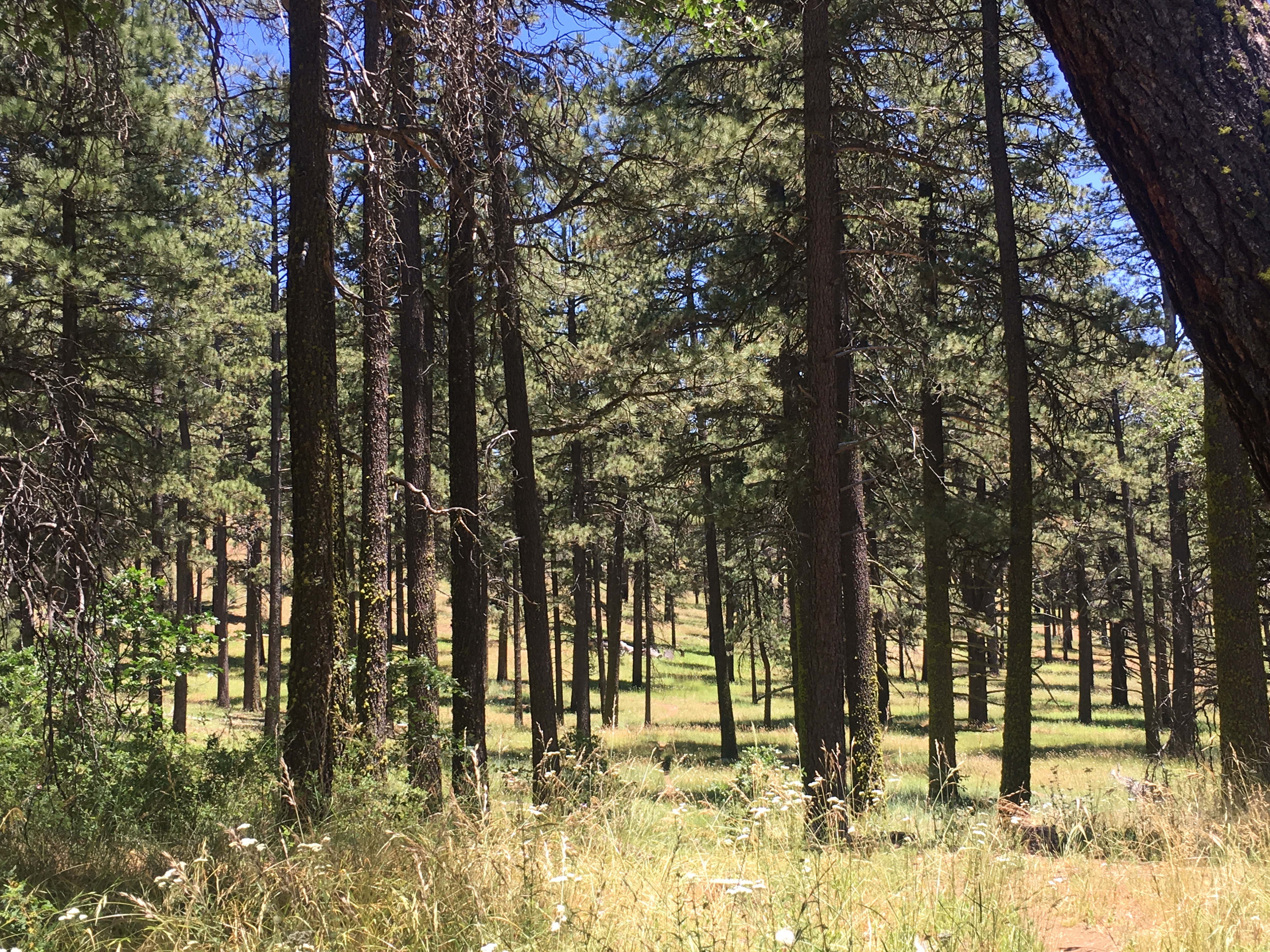
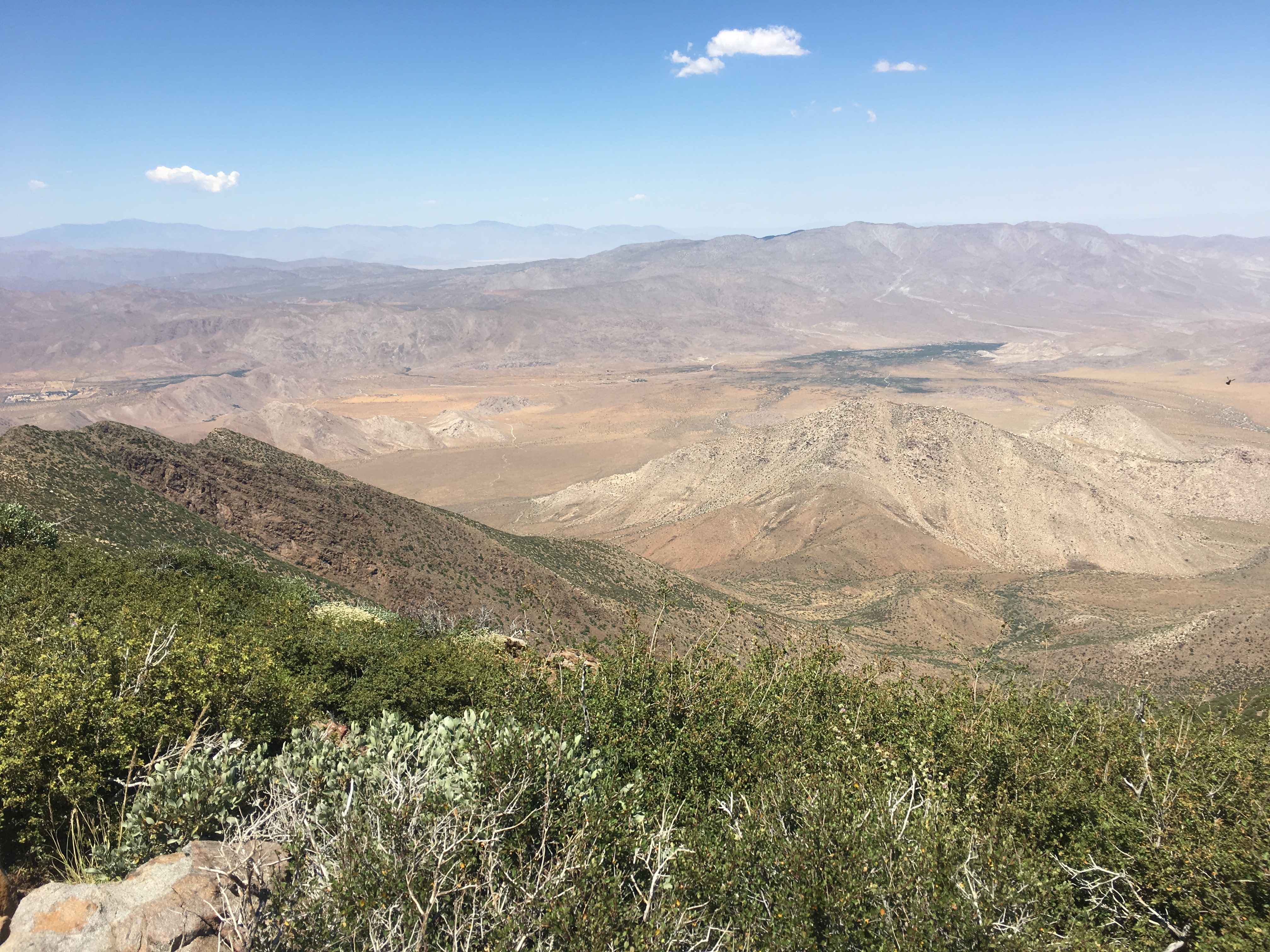
A significant place for me here, though not one I have too often frequented while living in San Diego, is Mount Laguna. It is a majestic and magnificent place, with trails that meander through meadows and groves of pine trees, and skirt mountainsides overlooking the Anza-Borrego desert. I felt very drawn to visit Mount Laguna before my departure in less than two weeks’ time, with the desire to hike a specific trail that has been on my mind for months.

Setting off on the trail, I breathed deep, enjoying the warm mountain air. I paused frequently to appreciate the beauty of the environment around me, wanting to be as present as possible on this last opportunity I will have to walk the trail for some time. I also found myself curious about the thoughts passing through my mind: songs new and old, elements of a yoga sequence I’ll be sharing this week, and reflections on significant conversations that have taken place over the past several days – an interesting array to watch unfold.

A thread of conversation that has been especially strong, necessarily so, has been that of love. More specifically, reflecting on and living into revolutionary love, a transcendent force that permeates all beings and all things, by which we are all connected and is the only constant amidst the everchanging nature of our lived reality. In this time of transition, I’ve been resting into reflection on what is temporary and what is constant, perceived or actual. Cherishing significant relationships that have been co-created and co-cultivated in the past months and years, I’m curious as to what elements of relationship will remain and what elements of relationship will transform. Knowing that change is inevitable, I center myself into the gratitude for what has been and an openness to what will be. In this process, connecting intentionally with the essence of love provides a deep nourishment as well as guiding force to propel me further in service of peace, justice, healing, and transformation.

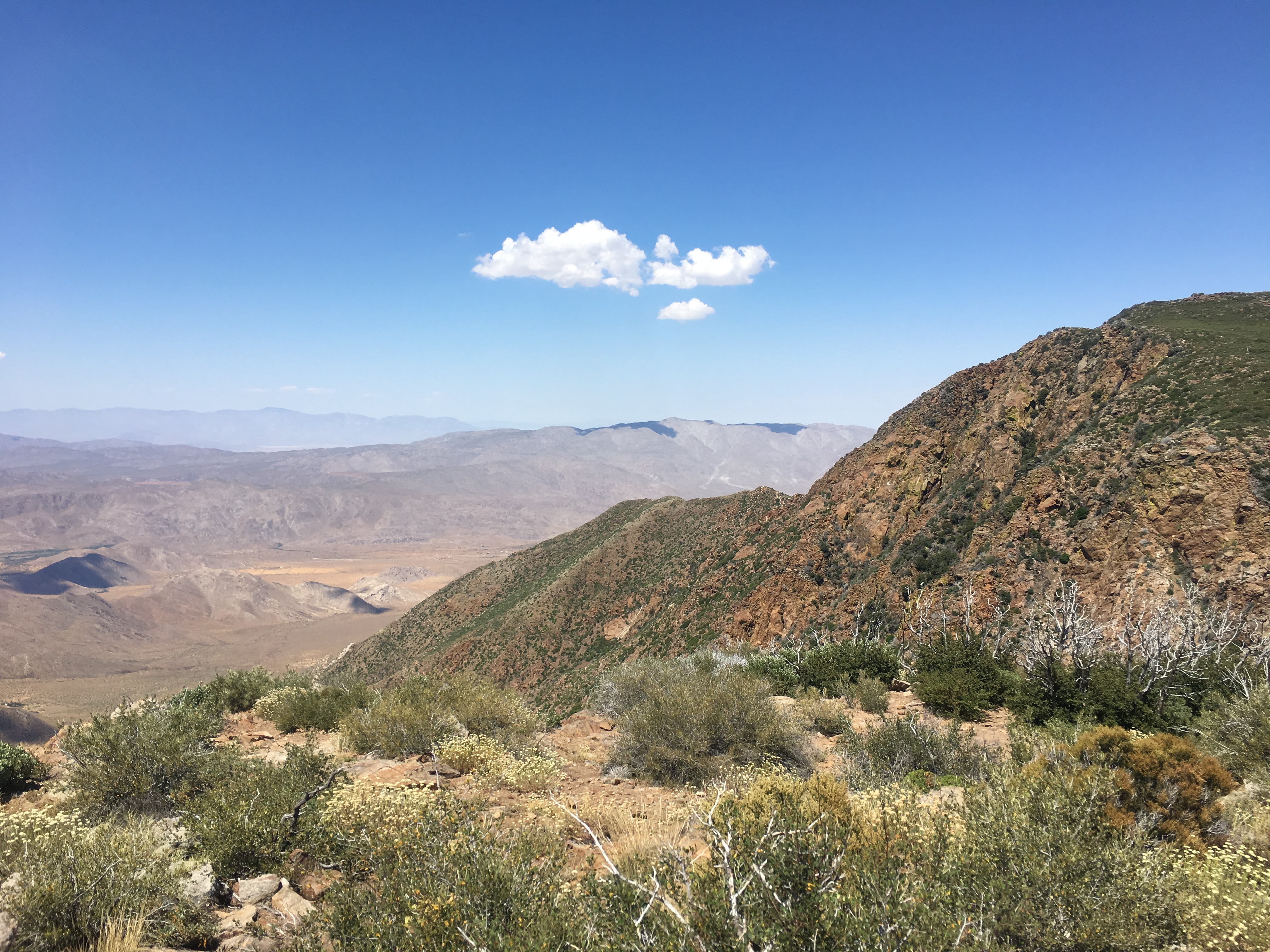
Continuing along, I passed through familiar and unfamiliar portions of the trail until eventually I found myself on the east side of the mountain, taking moments in movement and stillness with my gaze stretching across the vast expanse of Anza-Borrego. Stopping at outlooks on the trail, I breathed in the landscape, feeling myself a part of the vastness that unfolded before me. As I traversed this portion of the trail, a part of the Pacific Crest Trail no less, a new thought came to inhabit my mind. I reflected on John O’Donohue’s passage written above, in relationship with how strong my desire was to walk this trail at this time. It struck me how the place of the trail so perfectly captured the current space of my life. I am preparing to move across the world, to live, learn, work in the beautiful community of practice that is Corrymeela. It is a new beginning, filled with unknowns. At this moment in my life, I am moving along an edge with my gaze cast eastward, eager to experience all that which will come. I am simultaneously immensely grateful for the grounding I feel in the nourishing relationships in which I share in San Diego.

What I thought would be a visit to a place I love came to be so much more. Feeling the threads of reflection from the week weave together, I was held not only in mountain landscape, but also in the continuing support of deeply loving and caring relationship. In the silence and spaciousness of the mountain, I was able to experience grounding in this moment of transition simultaneously from the inside out and from the outside in.

© 2019 All Rights Reserved