On Efficiency, Intentionality, and Care

In recent weeks, I’ve found myself in recurrent conversation and reflection about time, pacing, relationality, and flow. These threads have been weaving in reflexive navigation of collaborations and convenings alongside colleagues, friends, organizations, and processes. In these different spaces of encounter and exchange, I have noticed moments of profound resonance as well as deep dissonance that seem somehow tethered to time:

  • Moments when time feels like a soft companion, and others where time feels like a burden, a foe, or both.
  • Moments when process seems to circle and circle, conversations belabored and heavy as collectives strive for clarity yet only feel to deepen into complexity.
  • Moments when time boundaries have been breached – extending beyond a committed end point, sometimes by a little, sometimes by far more than feels honoring to the people and to the process.
  • Moments when collaboration flows nearly seamlessly, where time feels to suspend as conversation becomes a container for craft and creation.

Across these experiences, among many others, the center point of polarity presents as time. Yet, time is not itself the issue. Time is relative – our relationship to it shaped significantly by culture and context.

The deeper invitation these experiences may hold is toward an attentiveness to pacing, which I understand to be our relationship to movement with and through time. In conversation with a dear friend about the processes of one community with which I am involved, he gave voice to a couplet to which I’ve been consistently returning: pace of care and pace of purpose.

Pace of care suggests moving in a way that attends to relationship. It holds the spaciousness to give voice and listen deeply to individual and collective needs, to name experiences of challenge, to process through conflictual dynamics, to celebrate and dignify one another.

Pace of purpose suggests moving in a way that attends to vision. It holds the encouragement to move with generative momentum in the process of creation, to be accountable to commitments, to hold the flexibility to follow emergence while remaining anchored in intention.    

How do we move both at the pace of care and at the purpose?

Holding these pacings not as distinct tides, but rather mutually constitutive flows that humanize and give dignity to process, the inquiry might be reframed: How do we move at the pace of intention?

Inhabiting this inquiry has opened a curiosity around notions of efficiency. When this word initially emerged in my reflections, I noticed a resistance. I am wary of how pernicious capitalist impulses of productivity and urgency so powerfully shape relationships to time for so many of us. How efficiency is frequently framed in service of minimizing cost and maximizing profit, too often at the expense of people and the more than human world.

Holding this resistance, my curiosity persisted, curling around contesting embodied experiences: The ease and flow when creative and collaborative processes moved efficiently, and the heaviness and burden when such processes moved at a pace that felt neither caring nor purposeful. The contrast of these experiences illuminated the synergy that expresses itself in the presence of alignment. This felt sense of flow was expressed when there was an alignment of values, purpose, and process, and enhanced when these dimensions were clearly named for collective visibility and accountability.

It is of note that this frame of efficiency does not correlate to speed or even a singular pace. There will be times where we move fast, where we move slow, and even when we pause, because that is what is needed and generative in the moment. This approach to efficiency thus has less to do with a calculus of time, and much more to do with the practices that enable us to move individually and collectively at the pace of intention.

Efficiency (n.): A quality of pacing in creative and collaborative endeavors emergent from remaining in integrity with intention, made possible through alignment of values, purpose, and process.

I am noticing, learning from, and seeking to embody various individual and relational practices to nurture the capacity to move with efficiency at the pace of intention. Here is an incomplete and growing list of such practices that I share with humility and curiosity about what your practices may be:

  • Ensure collective visibility and consent to the intention of a given conversation or process.
  • Be intentional about the process through which a conversation or collaboration unfolds. For example, ask the questions: How do we want to have this conversation? How do we want to approach this piece of work? What is the sequence of steps or inquiries that best enables us to fulfill our intention?
  • Cultivate the capacity to notice and name when a process or conversation is deviating from purpose. In this naming, center choice: Is this a deviation from original purpose that feels generative and important, or is it something that can be held for future conversation?
  • Acknowledge when creative process or conversation feels cumbersome. If there is spaciousness to do so, pause so as not force process. Trust that the time will come where creativity and creation will flow effortlessly. (This practice must be held in relationship with the reality of timelines and delivery dates, which sometimes impel engagement despite unideal conditions.)
  • Attend to relationships with authenticity and care, always and all ways.

© 2025 All Rights Reserved

On Relationships, Care, and Accompaniment

I’ve been in a space of noticing, noticing again, and noticing more. This noticing centers around a persistent dynamic that seems to be expressed in social change or social purpose-oriented organizations. The specific social change spheres I am moving in currently are those of peacebuilding, conflict transformation, and social healing and so these reflections will focus from my perspectives and experiences in these spaces.

What I am noticing is that many of these organizations that are oriented externally toward building peace and transforming conflict are themselves enmeshed in conflict. This used to create confusion in me. It felt incongruent. How come our efforts for peace are so embroiled in the dynamics that are the anthesis of that which we are pursuing?

Now I inhabit a different perspective. Nestled within this challenge is an opportunity: How can we pursue our missions of peace and justice in a way that is congruent with this very vision? This orients us toward process – to reckon honestly with how our processes of organizing replicate the dynamics we are seeking to transform, and to inquire into how we can organize in a way that embodies the change we are seeking to create.

This inquiry has guided me into the fractal of relationship. Relationships are the vehicle through which social healing and change unfold. They the terrain in which we can practice the embodiment of change. From my perspective and orientation to this work (a space of continuous learning, unlearning, and reflection), this invites a practice of relationship that is grounded in sincerity, authenticity, care, and love.


I am currently navigating unfolding encounters into the relational landscape of philanthropy. One expression of these encounters is that of the relationship between donors and partners. Drawing forth the threads of reflection shared above, I have found myself wondering about the role and responsibility of funders when partner organizations experience conflict or fracture. Far from answers or clarity, this has led me into an array of questions:

  • What is the quality of relationship between a donor and partner that enables a partner to share honestly about the challenges their organization is experiencing without fear of negative consequence?
  • What are the organizational and relational structures in place that enable conflict to be met with care? 
  • How can opportunities be crafted or created to enter into conversational spaces that are conducive to honest, open sharing?
  • How can we expand notions of the resourcing funders provide beyond finances to more holistic forms of accompaniment?
  • Where is there room for mutual transparency – where funders and partners can share transparently challenges they have navigated or are navigating?
  • How can donor-partner relationships embody a quality of relationship across differentials of power and positionality that is reflective of the constellation of relationships we might seek to co-create in a world characterized by justice, dignity, and care?

In the relational landscape these questions ask into, I sit on the periphery and somehow maybe also in the middle. I am not of a funding organization, nor a partner organization, yet I am connected to both. I am listening, curious, unsure yet utterly convinced that our relationships across all scales of change are both the soil and the seeds from which transformation grows. In each encounter along our journeys of co-accompaniment, we are granted the opportunity and perhaps even imbued with the responsibility to till the soil, to tend the seeds that hold within them the change we seek. In my personal practice, drawing on the words of Grace Lee Boggs, this entails cultivating a “limitless capacity to love, serve, and create for and with each other.”

This cultivation is slow, circular, always ever incomplete. Perhaps because ‘completeness’ or ‘success’ is not the point. Rather, it is to be in the process. To be committed to try, try differently, and try again.

© 2024 All Rights Reserved

An Ever Unfinished Conversation

1.
Fear thrives in separation and distance.

2.
In the chasms that echo between the not-yet-met and the not-yet-known, imagination grows monsters.

3.
To traverse these chasms that exist within us and between us, we must be open to encounter.

4.
I am encountering fear.

5.
Maybe it’s truer to say, I am encountering myself. For fear is not separate from me. It threads through my tissues and is intertwined in my thoughts.

6.
A mentor once asked me, if I were a house, which aspects of myself would I welcome in and which I would close my door upon. There are aspects to which I would feel challenged to extend hospitality, but rather than close the door, I would prefer that we go on a walk together.

7.
My fear and I are going on a walk.

8.
As we walk, we talk. Not in words, but in textures and sensation.

9.
Sharp. Breathless. Hollow. Trembling. Rough. Weary.

10.
My fear is encouraging me to notice and acknowledge its multiplicity. Not reducible to a single moment, experience, or sensation – it expresses itself in nuanced ways.

11.
The more we talk, the more I notice.

12.
Limbs rigid.

13.
Movement awkward.

14.
Thoughts reeling.

15.
Heart throbbing.

16.
Hands gripping.

17.
Breath shallow.

18.
Chest armored.

19.
Mind unsteady.

20.
Our conversations are not pleasant.

21.
They are necessary.

22.
When fear is present, joy and ease feel far out of reach.

23.
To claim joy and access ease in the presence of fear is an act of resistance.

24.
To feel fear and dance anyway.

25.
To feel fear and laugh anyway.

26.
To feel fear and play anyway.

27.
To feel fear and human anyway.

28.
This practice of resistance has been and continues to be embodied by Black feminism with fierce grace for generations.

29.
May we always uplift and honor such lineages of resistance to systems of violence, oppression, and dehumanization, lineages that strive for collective liberation. For when those most marginalized in society are free, it means all are free.

30.
For some, to enter into conversation with fear is a choice. For others, it’s a daily conversation, imposed by conditions of interpersonal and structural violence and abuse.

31.
For all, it can be a conduit of transformation.

32.
In the conversations and spaces I inhabit, transformation as a term comes up frequently.

33.
People speak of transformation of self, of relationships, of communities, of society. I do, too.

34.
In the quest to usher and accompany collective transformation, there is a tendency to projectize change efforts.

35.
We focus on how to make change happen.

36.
Change is always already happening.

37.
We explore how to guide the unfolding of change so as to move closer to a world of belonging, of dignity, of love.

38.
We imagine possible futures and ways to bring those futures alive in the present.

39.
These are complex conversations.

40.
Perhaps, at essence, the dynamics are quite simple.

41.
It’s about relationship.

42.
Relationship to self, to others, to community, to the earth.

43.
Relationship shaped by the dance between fear and love.

44.
Simple doesn’t mean easy.

45.
In my current conversation with fear, I try to ground into love.

46.
I try to root into my faith that love is ever-present, but self-judgment and self-doubt are very loud conversationalists.

47.
So I choose joy. I choose ease.

48.
Most days, I move to remember joy in movement. To feel ease in my body.

49.
Slowly by slowly, this has been helping me to rebuild and reconnect with strength I once had.

50.
Returning. Remembering. Rebuilding. Reconnecting.

51.
An essence of any practice is repetition. Rhythmic return.

52.
Rhythmic return suggests commitment. Commitment suggests love.

53.
Bija Bennett has said, “Love is the glue that holds things together as well as the boundary that defines and separates them. This discernment quality sees the difference between two things and holds them separate so that they may know each other. One end of love is absolute separation. The other end is absolute union. In our relationships, we discern our differences so that we may know both ourselves and one another.”

54.
In the way that yin contains yang, maybe love contains fear.

55.
For encounter to be a possibility, separation must exist.

56.
Maybe the existence of fear is that which enables access to a knowing of love that would otherwise not be possible.

57.
It seems that sometimes, in certain spaces, people are afraid to talk about love. How ironic.

58.
I am curious about how to create conversational containers where love is at the center.

59.
More and more I sense that these conversations cannot be entered through the doorway of thought and logic.

60.
When we center the body, the wholeness of our being, and our relationality within and beyond a given space, a different kind of conversation becomes possible.

61.
It’s something to do with the quality of things.

62.
What happens when we get curious about the quality of presence we carry and hold in an encounter – where our curiosity is not driven by a desire to find answers, and rather is grounded by a commitment to humility and an appreciation of mystery.

63.
Humility. Mystery. Ambiguity.

64.
These are not experiences or qualities that are nurtured in dominant society.

65.
Even our nervous systems prefer predictability, stability, and consistency.

66.
What are the conditions that enable an appreciation and embrace of the unknown?

67.
What are the practices that cultivate a capacity to inhabit risk wisely?

68.
What are the routes to return to a safer space when the level danger becomes too high?

69.
What happens when there is no possibility for return?

70.
Some questions lead to answers. Some questions lead to more questions. Some questions lead to mystery.

71.
In his Letters to a Young Poet, Ranier Maria Rilke says, “Don’t search for the answers, which could not be given to you now, because you would not be able to live them. And the point is to live everything. Live the questions now. Perhaps then, someday far in the future, you will gradually, without even noticing it, live your way into the answer.”

72.
Maybe it is best to let the questions lead.

73.
Approaching routes and paths toward which I experience uncertainty I find myself repeating two phrases. “Just see what happens.” And. “Easy, easy.”

74.
I wonder what would happen if we approached encounters with and of fear with compassionate curiosity.

75.
Sometimes the fear is strong enough to deter encounter. There is wisdom in that.

76.
These kinds of encounters cannot be rushed. If we try to hurry into them, the consequences can be high: injury, harm, violence, death…

77.
I’m learning to move at the pace of healing.

78.
It’s a slow study.

79.
Yin contains yang. Love contains fear. Healing contains hurt.

80.
It’s a practice of patience. And patience isn’t passive.

81.
Patience is creative adaptation, radical trust, tenacious tenderness.

82.
Patience is active presence.

83.
It’s the quality that grounds the accompaniment of transformation in generational time.

84.
With patience, we can notice differently – attending to the subtle sensations, shifts, silences, and songs that unfold through the process of integration.

85.
How do we notice our bodies healing?

86.
Skin regenerates. Muscles rebuild. Bones, ligaments, and tendons reknit.

87.
Even the sharp edges of a broken heart can soften over time.

88.
Healing. Integration. Process oriented terms, suggesting a movement toward wholeness and at the same time an acknowledgment that whole does not mean intact.

89.
We are always ever broken, fragmented. We are always ever whole, a patchwork knit together with the threads of love.

90.
It’s a practice of remembering.

91.
We humans are forgetful creatures.

92.
How do we remember? Again. And again. And again. And again.

93.
It takes courage.

94.
In my encounters with fear, I don’t feel courageous. I feel fragile, fickle, fumbling my way toward myself.

95.
Courage. It means to take heart.

96.
To feel fear and love anyway.

97.
So here I am, in slow study. Walking with fear. Moving with joy. Leaning into love.

98.
I forget often. I remember sometimes.

99.
trust in the wisdom
of rest, healing, and slow time
the true pace of life

100.
Just see what happens.

© 2022 All Rights Reserved

Practice is in the Return

There is a growing tide in the social change ecosystem that recognizes the role of self and collective care as necessary not only to support the sustainability of activists and social movements, but also to be in integrity with the vision and mission of the work. Such an approach to activism has been described in different ways in different contexts. A powerful current of this approach is that of healing justice. Cara Page and the Kindred Southern Healing Justice Collective describe healing justice in the following way: “Healing justice…identifies how we can holistically respond to and intervene on generational trauma and violence, and to bring collective practices that can impact and transform the consequences of oppression on our bodies, hearts and minds.”1 The cultivation of practices that support the transformation of trauma and violence and nurture healing at individual and collective levels is a crucial pathway toward sustaining activists and movements seeking peace and justice.

For individuals, organizations, and communities engaged in social change, a question thus arises as to how are such practices cultivated and sustained. In contexts filled with urgent and competing demands, and risks to personal and collective safety, accessing and prioritizing care practices is often perceived to be a distraction from the ‘real work.’ It is only through attending to our own care, healing, and wellbeing, however, that we can be sustainable and in integrity with our work toward the building of just and dignified futures.

To support the development and consistency of care practices, I wonder if it could be supportive to intentionally consider specific elements of practice. Beginning in January of this year, I began a journey through which I have been learning about the nature of practice in new ways. These learnings and reflections are by no means intended as a definitive claim about practice, rather they are insights that have emerged through my embodied experience and about which I am curious in how they can be applied to other realms of practice.


Over the course of last year, I followed my friend Julie’s journey from vertical to vertical, from standing on her feet to standing on her hands. The journey unfolded through 365 days of daily practice, slowly building the strength and developing the balance to hold a free-standing handstand. I was curious and inspired. It was a joy when the coach and guide, Damien Norris, extended an open invitation to participate in this journey by making the instructional videos available on YouTube.2

January of this year marked the beginning of my handstand journey. It also marked the beginning of what has proved to be fairly challenging year, one filled with seasons of grief, displacement, and isolation. Most of the year, I was able to easefully integrate the training into my daily routine. Some days and weeks, however, I have not been able to train due to travel, sickness, or other circumstances. In both the regularity and inconsistency of my training, I’ve become deeply curious about the nature of practice.

Practice holds inherent a repetitive quality, requiring a regularity of participation. In the case of the handstand journey, the invitation is extended into daily practice. Each day, there are particular movements to train, beginning with hollow body holds and slow progressing over time. And yet, the days and weeks in which I was unable to do the training, the practice did not disappear. The practice has been as much in my active participation in the training as it has been in my choice to return to it, be that each day or after a week away. The essence of practice has been not only in the training, but in the choice of return.

Fairly far along into the handstand journey, I am confronting a new obstacle in my practice. Having recently dislocated my elbow, I am unable to bear weight on my left arm. For the first couple of weeks after the injury, I drifted from the daily consistency of my practice, disappointed and unsure when I would be able to return. Eager to continue in the journey, but uncertain of how to do so in these new circumstances, I reached out to Damien, who graciously offered a variety of suggestions to adapt my training.

Returning to consistent training has felt amazing. Whereas my body feels challenged by some of the new movements, the felt sense of return to the practice, which has become a source of sustenance and stability through this year, has been one of comfort and a deep settling in my core. Although I continued to move and train in the days and weeks since the injury, I would not have been able to return to the specificity of handstand training so soon were it not for external accompaniment and support. The guidance and encouragement were essential in a circumstance where I was in doubt about my ability to remain active in the practice.

While I remain far from the ability to hold a free-standing handstand, as I find my way there, I am learning deeply about the nature and components of practice. At this moment, I am present to three key components that facilitate and comprise practice, namely, the physical act of training, the choice of consistent return, and accompaniment along the way. As I continue in this handstand journey, I am curious of what more I will learn.


Enacting and sustaining generative change, whether at the individual or collective level, requires shifting habits of being from those that perpetuate harm or dis-ease, to those that support healing and wellbeing. Such change involves the integration of new practices into our lives. This is much easier said than done. Emergent from an understanding of the nature and components practice – behavior, accountability, and accompaniment – we might invite ourselves into a set of inquiries that help to identify not only the activities and processes that can support us, but also the conditions and mechanisms of accountability necessary to make these practices sustainable. These inquiries may sound like:

For individuals

  • What are activities or experiences that support my wellbeing and bring me joy?
  • What conditions need to be in place for me to consistently and regularly participate in one or more of these activities?
  • Who can support me in to remain consistent in my practice?

For organizations

  • What rituals, policies, and processes can support the wellbeing of employees individually and the organization as a whole?
  • What conditions need to be in place to ensure these practices are regularly and consistently upheld?
  • Who within or outside the organization can support consistency of practice?

For communities

  • What activities, traditions, and rituals can support the wellbeing of our community?
  • What conditions need to be in place for these practices to be regularly accessed?
  • Who in our community can support consistency of practice?

As we seek to adopt new practices to nurture care and support transformation, perhaps any clarity emergent from such inquiries could support us, illuminating what will enable greater accountability to ourselves and each other as we strive to embody and bring forward greater peace in ourselves and justice in the world.


accountability

consistency’s key

practice is in the return

each day, try again


1 To learn more about the work of the Kindred Southern Healing Justice Collective, you can check out their website, http://kindredsouthernhjcollective.org/.

2 If you’d like to start your own journey to handstand, you can find Damien’s guidance through all 365 days available here.

© 2022 All Rights Reserved

On Peacebuilding and Sandcastles

As a practice, I find curiosity about language to be very helpful, opening new pathways of understanding and orienting to what might often be unseen or unheard in the words we use. Sometimes this practice takes form through an exploration of etymologies, tracing the roots of words, the journey these collections of letters and syllables have taken through time. Sometimes this practice takes form through an exploration of metaphor, a consideration of the imagery that words evoke. I am fascinated by the possibilities that language holds to reinforce dominant narratives and paradigms, and conversely to reimagine and redefine wor[l]ds. 

Through my engagement in peacebuilding, I have increasingly found myself caught up by the very term that defines the field. In many ways it is helpful, emphasizing the action of construction – building relationships across all levels and in all sectors of society that facilitate greater peace in both the absence of direct violence (negative peace) and the presence of attitudes, institutions, and structures that uphold and sustain a just and peaceful society (positive peace).

And yet in the dominant metaphors that arise in relationship to the term ‘building,’ I take pause. I have heard peacebuilding imagined as ‘building the house of peace.’ Perhaps it is a limitation of my imagination, or my cultural influences that impose a linear and regulated process of such a construction. There are aspects of this process that are immensely relevant and arguably necessary for peacebuilding, including: attentiveness to preparation, establishing a strong foundation, developing proper scaffolding, including ‘weather proofing’ elements to support the sustainability of the structure, and balancing the distribution of energy patterns.1

At the same time, in my exposure to construction (at least from my cultural context), there are also aspects that are present in the field of peacebuilding that are less helpful, potentially detrimental. For example, the imposition of unrealistic timelines that may or may not account for delays in the accessibility or availability of certain resources or changes in context that create such delays, the expectation that the final structure will perfectly match the blueprint, the time bound nature and externalization of the task of construction.

Acknowledging both the possibilities and limitations of this metaphor, I became curious of how different imagery could offer new layers of understanding and orientations to practice.2 In particular, what is offered if peacebuilding is imagined akin to building a sandcastle? 

Shores, Tides, and Time

While sandcastles can be built anywhere both sand and water are accessible, they are often built at the edge of a body of water. They are situated in the in-between space, the liminal place of encounter between land and water. In this space, waves lap the shore, tides ebb and flow, water saturates the sand. It is a place where binaries are obsolete – there is no static or concrete delineation of where the land ends and the water begins.

Where peacebuilding takes form, while social, political, and cultural divisions may characterize the dominant landscape (just as from afar one might say, there is the land and there is the water), the historical and lived realities are infinitely ambiguous and complex. And in fact, it is through the embrace of this ambiguity, the transcendence of binaries, that peacebuilding is possible.

The water’s edge is characterized by a constant ebb and flow of waves and tides, which move in cycles. Waves crash and retreat much faster, in the course of seconds, whereas tides rise and fall over the course of a lunar day. In some moments, waves crash with immense power and in other moments waves lap gently against the shore. In this context, the placement of a sandcastle is vital as these cycles pose differing levels of risk for its destruction.

This movement and risk parallel the rhythms of cycles of violence as they threaten efforts to build peace. In acute, hot conflict, sometimes direct violence rages and other times there is a semblance of pause, though the risk remains ever-present. On a longer timeline, conflicts ebb and flow generationally, in constant transformation over time. Thus, efforts to craft peace are constantly confronted with the presence and possibility of violence. In this context, an important question that emerges is: How do we cultivate and practice discernment in the planning and strategy of peacebuilding that holds in awareness the rhythms and predictabilities of cycles of violence?

Bridging Grains

Building sandcastles is possible as a result of surface tension – the force of attraction between water molecules. In the mix of sand and water, water molecules forms liquid ‘bridges’ between the grains of sand.3 These liquid bridges enable the structure to take form. It is important to have the right balance of water and sand, otherwise the structure will not hold. This balance may need to be actively supported, adding more water as the sand dries out. Further, to maximize the strength of the liquid bridges that hold the structure each grain must be coated with water.4 Within these dynamics, there are a number of key insights for peacebuilding practice.

The role of bridging and the centrality of relationship are immensely important aspects of peacebuilding. Durable change happens slowly, over time, and through the cultivation of relationships that traverse social, political, economic, and religious divides. Structural and societal transformation cannot take place without the existence of bridges embodied in people and processes at the granular level.

In a shift from the theory of ripeness in processes of change – the idea that change unfolds only when the circumstances or conflict has matured sufficiently – John Paul Lederach has suggested a theory of rightness. When the right people come together at the right place at the right time, new possibilities can emerge. This is encapsulated through Lederach’s metaphor of the critical yeast. Adding to the role of a critical mass in bringing about large-scale social change, Lederach notes that it is not only in the quantity of people involved, but “rather in creating the quality of the platform that makes exponential growth strong and possible, and then in finding ways to sustain that platform.”5 Transformation is thus facilitated through bringing together the right balance of elements (people, context, timing, etc.), and sustaining those elements over time.

Lastly, for peacebuilding efforts to be relevant and sustainable, they must be as participatory and accessible as possible. While reaching each person in society may not be realistic, the effectiveness and strength of change efforts is bolstered when more people in society feel they have voice and agency relative to their own lives and the future of their community. 

Containers, Relationships, and Systems

Sandcastles are built by virtue of containers. Pails, hands, shovels, or shells are filled with wet sand. The sand, bound by liquid bridges, takes the shape of the container it fills. Then the sand is deposited onto the growing structure. It is through the fitting and scaffolding of these differently or perhaps similarly molded constellations of sand together that the sandcastle is formed. To ensure there is not excess water mixed with the sand, it is helpful for the containers to be permeable, with holes at the bottom to let excess water drain out. If approached strategically, the drained water can serve to dampen the next patch of sand that will be shaped.

In Lederach and Lederach’s exploration of sonic metaphors for reconciliation and social healing, they consider the metaphor of a container in particular reference to that of a Tibetan singing bowl. They suggest “social healing and reconciliation emerge in and around the container that holds collective processes, inclusive of but significantly more than the individual’s particular journey.”6 From a systemic perspective, it is helpful to consider peacebuilding and social change as it emerges from a constellation of containers. For example, there may be collective processes focusing on humanitarian response, another on access to education, another on legal advocacy, and another on trauma healing, just to name a few. Peace and justice are best created and pursued through the harmonizing of these approaches so that they can be mutually supportive.

In this orientation toward mutual support, it is important to acknowledge the unique contributions a given approach to social change offers and at the same to notice and nurture the ways in which these approaches are connected. This relationship may be one of sequentiality, whereby certain conditions must be obtained for other efforts to be undertaken. This relationship may also be one of simultaneity, whereby different efforts toward change are supported alongside one another. Remembering and attending to these dynamics of relationship is critical to systemic change, inviting a strategic approach to how given efforts can prepare conditions for future change and how concurrent processes are themselves permeable, each impacting the other.

Temporality and Sustainability

While sandcastles may often be associated with temporality – washed away by the waves and the wind – this dissolution primarily occurs because they cease to be tended. Without the addition of water to reinforce the bridges between grains of sand, these bridges may dry and disappear. When wind blows or a large wave comes, without a consistent presence to attend to and repair the impact, the damage risks compromising the entire structure. Sometimes the forces are too strong and the sandcastle in its existing form is destroyed. However, all of the elements remain to build anew, integrating the experience and learnings from the previous iteration to construct a stronger and more sustainable structure.

Peacebuilding endeavors occur in volatile and unpredictable contexts whereby threats to process are ever-present. The momentum of multiple currents of violence is powerful and strong, posing risk to the durability of such efforts. While funding and programmatic cycles are often short term with a focus on immediate impact, it is important to consider the long-term sustainability of peace. How are peacebuilding efforts sustained? By who? And how are those who are active in sustaining the peace themselves supported for this life long and generational practice?

At times, peacebuilding efforts may crumble, however that does not make the efforts futile. To begin again, despite the difficulty and despite the risks, is an embodiment of active hope, a commitment to the conviction that a different way of being together is possible. With each new beginning, different possibilities may be opened as learnings from previous experience are integrated and the craft of building peace is refined.

Dig Deep, Not Wide

There are multiple ways in which to prepare sand and water to build a sandcastle. It is possible to move back and forth, into and out of the water to collect water to dampen the sand. It is also possible to dig a self-replenishing water hole. The key in this approach is to dig deep to reach the water laden sand below. With the intention and motion of digging deep, inevitable the hole will widen.

Focusing here on both the preparation and sustenance of practice and the practitioner, there are two key considerations that arise from this image of valuing depth over breadth. Firstly, for practice, how is peacebuilding approached in such a way that the envisioned change is deep enough to be self-sustaining, rather than fleeting and surface level? Further, how are the place-based resources to create and sustain transformation accessed and uplifted, rather than relying on external sources? Secondly, for practitioners, how are we, as people involved in peacebuilding, supported to dig into our own depths to access our own sources of nourishment and replenishment?

Pause in the Messiness

Building sandcastles is messy. Immersed in the elements, it is inevitable that one becomes covered in wet sand and is hit by a wave or more in the process. Sometimes it is necessary to pause, brush or rinse oneself off as the discomfort of the sand may impact not only the process of building the sandcastle, but also the experience of it.

For peacebuilding practitioners, both people working in their home context and people engaged internationally, the context and nature of the field cannot but adhere and begin to impact at the level of practice and individual wellbeing. This may manifest as direct or vicarious experiences of trauma, burnout, or compassion fatigue, as just a few of many possible experiences of dis-ease common amongst practitioners. To the extent possible, it is important to integrate opportunities for pause, reflection, and respite – to take distance from the intensity of the work so as to be able to return and continue with greater clarity and resourcing.

Embrace Slow Work

Building sandcastles requires a slow approach. It may take time to come to the right balance of water and sand to best support the integrity of the bonds between the grains and thus the strength of the structure. Once containers are filled with damp sand, they must be placed and lifted away with care. Moving too quickly the molded sand risks collapsing. A slow and steady hand is important to accompany the cohesion and stability of the sandy arrangement.  

Though the volatile conflict environments in which peacebuilding unfolds are often highly dynamic and characterized but numerous urgent competing demands, the work of social transformation unfolds slowly, over decades and generations. As Bayo Akomolafe has said, “the time is very urgent – we must slow down.”7 There are moments in which responding to the urgency of a conflict situation is necessary. At the same time, it is important not to succumb to the pull of urgency, which can so easily engulf people and processes, causing great harm through, for example, burn out and unwise decisionmaking. Choosing to slow down, to move with intention, to prioritize relationship is countercultural, the choice itself an act of resistance to the dominant culture of urgency and productivity. This choice is an embodiment of care, for self and for others, and therein an embodiment of a way of being supportive of a more peaceful and just world.

Play

The process of building a sandcastle is inherently playful and creative. Often an activity children and adults delight in when at the beach, it can also be experienced as a honed craft and artform. Sandcastles invite and encourage play and imagination, creativity and expression.8

Play and imagination are highly underappreciated experiences and facets of peacebuilding. As a relatively new field that in some ways is still trying to establish itself on a global scale, peacebuilding has prioritized procedures over playfulness, data over delight. This is not to say that process, evaluation, and technicalities are not important. Rather, it is to acknowledge that play, creativity, and imagination are critical components and pathways to worldbuilding.

It is said that a challenge will not be surmounted through the same mindset that created it. Violence, conflict, and injustice are incredibly serious challenges, which we cannot serious our way out of. From the perspective of trauma, in experiences of acute trauma at the individual level, the capacity to access play and imagination are compromised. Creating opportunities for trauma impacted individuals to explore, regain, or perhaps experience authentic, unthreatened play for the first time is an important part of the healing journey.

There is much to be gained by not only integrating, but centering more opportunities for play and imagination in our peacebuilding efforts. The possibilities this holds for healing and transformation, from the individual to the collective, are immense.

Concluding Thoughts

There is no perfect metaphor, each analogy only offering some different ways of illustrating and understanding a given experience or thing. Guided by a curiosity around the imagery in the question: what peacebuilding is building?, the metaphor of a sandcastle suggests and centers different elements of process and practice than tend to dominate the field, which I find quite helpful. I hope this curiosity and exploration may be helpful, if not in the insights it brings forward, then in the approach, perhaps inspiring new imagery and thus possibilities in our work toward a world that is more peaceful, just, and dignified for all.


References

1 Lederach, John Paul. “Beyond Violence: Building Sustainable Peace.” Belfast, Northern Ireland: Northern Ireland Community Relations Council, 1994.

2 The inspiration for such an exploration is from Angie and John Paul Lederach, who together wrote an entire book exploring sonic metaphors in relationship with peacebuilding, reconciliation, and healing. Lederach, John Paul, and Angela Jill Lederach. When Blood and Bones Cry Out: Journeys Through the Soundscape of Healing and Reconciliation. Santa Lucia, Queensland: University of Queensland Press, 2010. https://www.uqp.com.au/books/when-blood-and-bones-cry-out-journeys-through-the-soundscape-of-healing-and-reconciliation.

3 Lucinda Wierenga, “How to Build the Perfect Sandcastle,” The Guardian (Guardian News and Media, July 31, 2009), https://www.theguardian.com/lifeandstyle/2009/aug/01/how-to-build-perfect-sandcastle.

4 Lara, “The Science behind: Sandcastle Building,” KiwiCo, August 27, 2019, https://www.kiwico.com/blog/the-science-behind/the-science-behind-sandcastle-building.

5 John Paul Lederach. The Moral Imagination: The Art and Soul of Building Peace (New York, New York: Oxford University Press, 2005), 93.

6 John Paul Lederach and Angie Lederach, When Blood and Bones Cry Out: Journeys Through the Soundscape of Healing and Reconciliation (New York, New York: Oxford University Press, 2010), 103.

7 Báyò Akómoláfé, “The Times Are Urgent: Let’s Slow down,” Báyò Akómoláfé, https://www.bayoakomolafe.net/post/the-times-are-urgent-lets-slow-down.

8 In this reflection, I acknowledge and give gratitude to Paul Hutchinson, who has encouraged and nurtured an imaginative and creative approach to social change. As one example, he guided a session exploring peace as an island, rife with metaphors and an incitement to imagining new ways of being and doing, with particular grounding in the context of the island of Ireland.

© 2022 All Rights Reserved

On Simple Things

The journey of healing is a fractal and spiral shaped practice. In our individual paths of healing, we twist and turn, return and try again, catching ourselves in the process of finding new ways of being with ourselves, with others, with the world. Collectively, these twists and turns are long and slow, shaped by and shaping of the interweaving of our individual healing paths. As these paths encounter one another, they may form a strengthened and deepened trail of connection and care. As these paths encounter one another, there may be disjuncture, wound meeting wound such that harm is enlivened and created amidst attempts toward repair. The journey of healing is a painful process.

Like a stone dropped into a pond creating ripples that extend outward, trauma gives rise to patterns of thought, behavior, and emotion that shape how we are in our bodies and our relationships. It is rare that the surface of a pond is perfectly still, absent of lingering ripples from stones dropped in the past or undisturbed by incoming streams or even the gentlest of breezes. We inherit the patterns of our predecessors, passed down through the generations. We develop patterns through our encounters with others, and through our navigation of this world.

Honoring the constant of change, the journey of healing is not one of achieving perfect stillness. Rather, it is one of finding and returning to a sense of steadiness through the tumult. It is the cultivation of the ability to practice discernment around the patterns that shape our individual and collective bodies. It is the nurturing of the ability to discern and choose helpful perspectives and actions, rather than perpetuating a pattern that may (have) become a source of harm. Part of this process involves presencing to the harms we have incurred, and the harms our hurt may have led us to inflict, as we trace the ripples of our wounding back to their source.

Navigating through conflict and orienting toward healing, we are called to practice noticing. To notice our patterns. To trace their source and their reach. As we seek to develop discernment around and transform our patterns, it is helpful to develop a practice of honoring the little things.

Sometimes we enter into practice. Sometimes the practice enters into us.

These months, I am noticing a pattern in my conversations, variations of a phrase that is written, uttered, read, and heard time and again.

‘it’s the simple things’

‘a practice of small wins’

‘it’s all about the little things’

Noticing this pattern, I become present to the healing and radical practice these words offer.

As we move along the spiral path of healing, our trajectory is shaped by a practice of noticing the little things. We begin to notice and come to know our patterns, how they enact themselves in even the smallest of ways in our thoughts, emotions, behaviors, and relationships. From this noticing, we can begin to shift, to make choices that move us in the direction of healing. These choices, these small wins, are reflective of our discernment, agency, commitment, and supports provided by our communities of care.

A practice of noticing the little things is one of resilience. We come to recognize even the smallest sources of joy, delight, nourishment, and love in our lives that, like stars dotting a night sky, offer illumination through seasons of darkness.  

A practice of honoring the little things is one of resistance. It defies a dominant culture that celebrates excess, grandeur, and large leaps of change. Amidst systems that seek to marginalize and dominate, such a practice resists the oppressive cloak of violence and silence, asserting joy and love as sources of and pathways to liberation.  

As we journey individually and collectively along spiral and fractal shaped pathways, centering the little things allows us move in harmony with the pace of change itself.

May we come to know and notice our patterns.

May we cultivate discernment.

May we choose ways of being and relating that orient us toward healing.

May we be compassionate with ourselves and others in our individual and collective journeys of healing.

May we experience moments of steadiness and ease.

May we enter a practice of celebrating the little things.

May we allow this practice to enter us.

© 2021 All Rights Reserved

New Beginnings

“Perhaps the art of harvesting the secret riches of our lives is best achieved when we place profound trust in the act of beginning. Risk might be our greatest ally. To live a truly creative life, we always need to cast a critical look at where we presently are, attempting always to discern where we have become stagnant and where new beginning might be ripening. There can be no growth if we do not remain open and vulnerable to what is new and different. I have never seen anyone take a risk for growth that was not rewarded a thousand times over.” 

~ John O’Donohue

This weekend is my second to last weekend in San Diego before leaving for Northern Ireland to live for a year as an intern with the Corrymeela Community, Northern Ireland’s oldest center for peace and reconciliation. The past few weeks, I’ve been enjoying nourishing time with friends, opportunities to connect and say goodbye for now. In addition to seeing people before leaving, I am also wanting to visit significant places. Humans are place-based creatures, though modern society all too often draws us away from this remembrance. Thus, in this liminal period of transition, I have made it a practice to be more intentional about the ways I inhabit the spaces and places in which I find myself.  

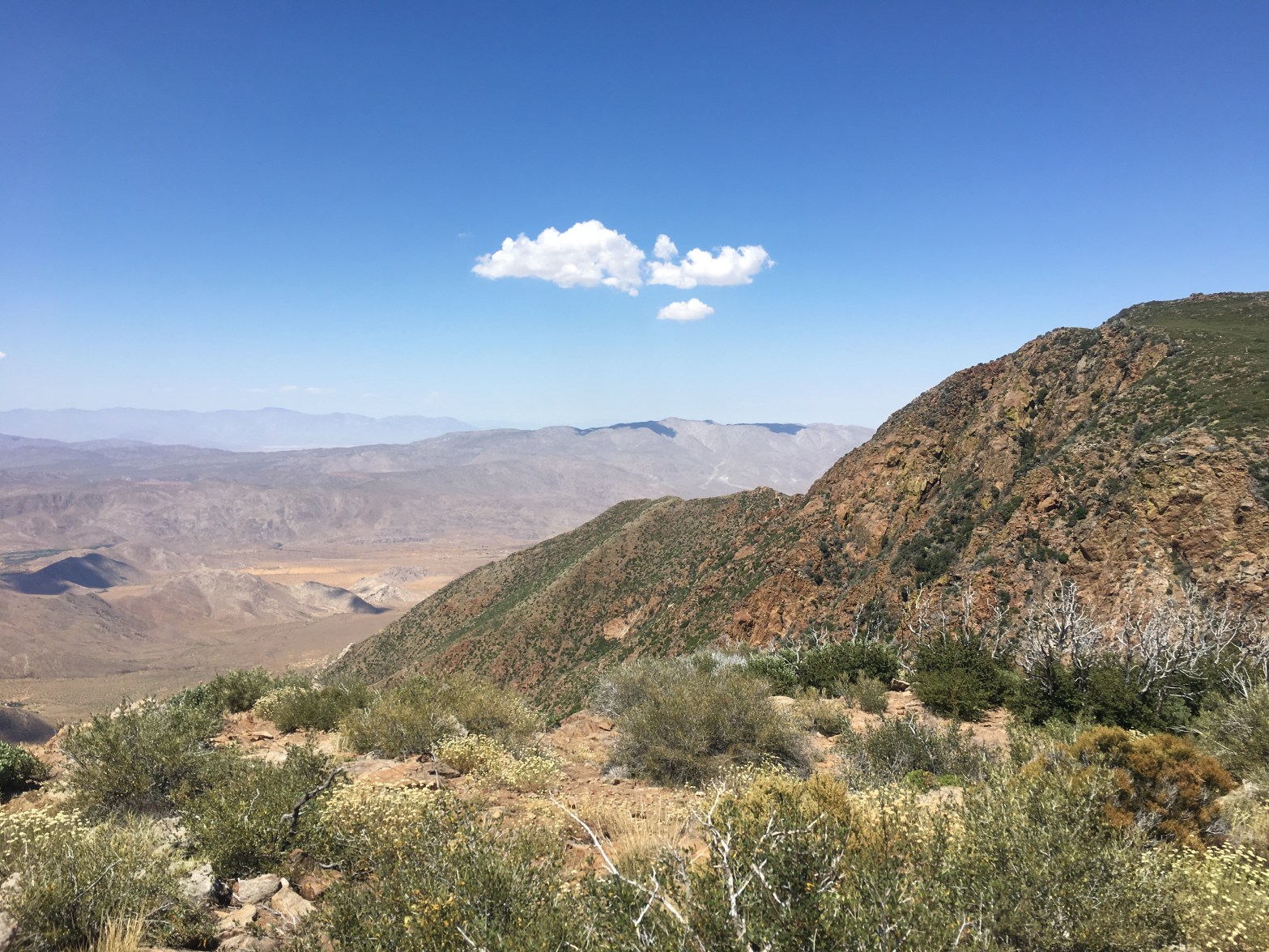
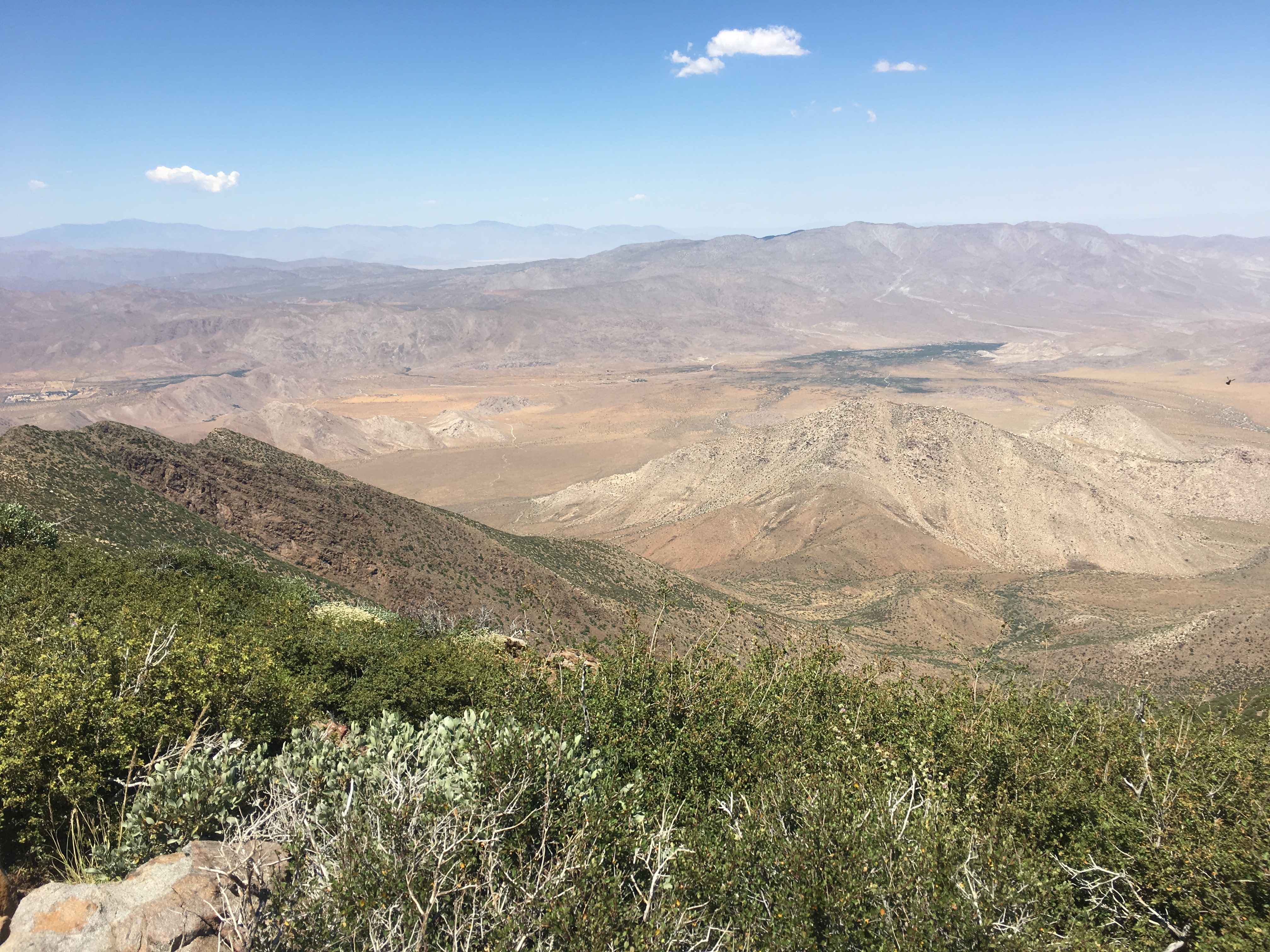
A significant place for me here, though not one I have too often frequented while living in San Diego, is Mount Laguna. It is a majestic and magnificent place, with trails that meander through meadows and groves of pine trees, and skirt mountainsides overlooking the Anza-Borrego desert. I felt very drawn to visit Mount Laguna before my departure in less than two weeks’ time, with the desire to hike a specific trail that has been on my mind for months.

Setting off on the trail, I breathed deep, enjoying the warm mountain air. I paused frequently to appreciate the beauty of the environment around me, wanting to be as present as possible on this last opportunity I will have to walk the trail for some time. I also found myself curious about the thoughts passing through my mind: songs new and old, elements of a yoga sequence I’ll be sharing this week, and reflections on significant conversations that have taken place over the past several days – an interesting array to watch unfold.

A thread of conversation that has been especially strong, necessarily so, has been that of love. More specifically, reflecting on and living into revolutionary love, a transcendent force that permeates all beings and all things, by which we are all connected and is the only constant amidst the everchanging nature of our lived reality. In this time of transition, I’ve been resting into reflection on what is temporary and what is constant, perceived or actual. Cherishing significant relationships that have been co-created and co-cultivated in the past months and years, I’m curious as to what elements of relationship will remain and what elements of relationship will transform. Knowing that change is inevitable, I center myself into the gratitude for what has been and an openness to what will be. In this process, connecting intentionally with the essence of love provides a deep nourishment as well as guiding force to propel me further in service of peace, justice, healing, and transformation.

Continuing along, I passed through familiar and unfamiliar portions of the trail until eventually I found myself on the east side of the mountain, taking moments in movement and stillness with my gaze stretching across the vast expanse of Anza-Borrego. Stopping at outlooks on the trail, I breathed in the landscape, feeling myself a part of the vastness that unfolded before me. As I traversed this portion of the trail, a part of the Pacific Crest Trail no less, a new thought came to inhabit my mind. I reflected on John O’Donohue’s passage written above, in relationship with how strong my desire was to walk this trail at this time. It struck me how the place of the trail so perfectly captured the current space of my life. I am preparing to move across the world, to live, learn, work in the beautiful community of practice that is Corrymeela. It is a new beginning, filled with unknowns. At this moment in my life, I am moving along an edge with my gaze cast eastward, eager to experience all that which will come. I am simultaneously immensely grateful for the grounding I feel in the nourishing relationships in which I share in San Diego.

What I thought would be a visit to a place I love came to be so much more. Feeling the threads of reflection from the week weave together, I was held not only in mountain landscape, but also in the continuing support of deeply loving and caring relationship. In the silence and spaciousness of the mountain, I was able to experience grounding in this moment of transition simultaneously from the inside out and from the outside in.

© 2019 All Rights Reserved

On Gratitude and Centering Relationship

In the fall of 2018, my dear friend Julie invited me to join a 30-day gratitude practice, connecting with four other women to everyday share three things for which we are grateful in a group text. I greatly enjoyed the practice, as it offered an opportunity to reflect more intentionally on the interactions and activities of my day. Over just a short time, I noticed myself resting more frequently into gratitude and being present to all that I have to be grateful for. Of the five other women sharing their daily gratitudes, I only knew Julie. The others live around the country. While not knowing these women in person, it was lovely to connect in shared practice, to learn about who they are and what they value through what they chose for their three daily gratitudes.

The thirty days passed, and Julie invited us to continue for another 45 days, which I happily did. Then came the new year and a I received a message Julie sent to our group, offering the invitation to join in 365 days of gratitude. Never before had I consciously committed to a yearlong daily practice, but having already established a rhythm of practice in the preceding months, it was an easeful yes to embark upon this journey.

Writing this, we are nearing the 180 day mark of gratitudes. The initial insights and shifts that unfolded from the first thirty days have sustained. The ways in which I orient toward the goings on of my life have shifted substantially, as I rest more fully into gratitude each day. Gratitude has become a space almost to which I default, resting into the gifts of the moment, even when those gifts are situated in times or spaces of anxiety, challenge, and overwhelm. There is another gift this daily gratitude practice has offered, however, one for which I am deeply grateful and on which I have come to reflect very frequently.

In reflecting each evening on the happenings of the day and choosing three things I am grateful for, I began to notice patterns in my gratitude notes. Consistently, one if not all three of my gratitudes is centered on relationship. It is that conversation I had with someone, a friend’s presence in my life, the support someone has provided in a moment of need, or the opportunity to support someone when they are in need. This has led me to reflect upon that which I value most in my life, and that which is most nourishing, namely centering relationship. I now carry a different quality of awareness with regard to the ways in which I share in and inhabit relationships in my life. With a deeper and more conscious appreciation for the sustaining force these relationships carry, I have also been provided with a directionality in terms of what I can move toward when I am feeling disconnected, anxious, and otherwise unwell. Knowing what nourishes me, I find myself being more intentional about cultivating and being deeply present to existing and emerging relationships. Sometimes it is just a momentary crossing of paths, a smile in the hallway. Other times, it is an hours long conversation that traverses vast landscapes of thought and reflection. Each of these embodiments of relationship carries such value, offering the opportunity of engaged presence, of seeing and being seen, of listening and being heard, of sensing and being sensed.

Continuing to navigate this year of gratitude, I have received a gift I did not anticipate, but has been so deeply transformative. I know now what nourishes me. Further, I know what nourishes me is the people with whom I am in relationship. Every evening, I receive the gift of resting into gratitude to and for the people in my life who challenge me, who support me, and who sustain me.

May we all know that for which we are grateful, and may we all have the opportunity to cultivate its presence in our daily practice. 

© 2019 All Rights Reserved