On Patience, Perseverance, and Practice

Through the alchemy of forests and friendships, my love of rock climbing has recently been rekindled. I am a novice climber, delighting in and curious about all that this movement practice holds. In the short time that I have returned to climbing, I have found myself curious about the interplay it offers between patience, perseverance, and practice.

~

Patience.  From the Latin patientia, meaning “the quality of suffering,” which is present participle of pati, meaning “to endure, undergo, experience.”1

Perseverance. From the Latin perseverantia, meaning “steadfastness, constancy” or the “quality of continuing or enduring.”

Whereas patience conveys a particular orientation to the experience of navigating challenging and painful circumstances, perseverance evokes a commitment to endure through the circumstances, to stick with it. This necessitates practice – the repetition of an action; trying and trying again and again and again.

~

When I climb, my current approach is primarily to repeatedly work routes that are (for me) accessible with a bit of challenge. Every once in a while, however, I mix in attempts of routes of a higher difficulty. These attempts often go like this:

Approach the wall.

Try out a starting position.

Fall.

Try a new starting position.

Get on the wall.

Fall.

Walk away.

Approach the wall.

Get into the starting position.

Reach for the next hold.

Fall.

Rest.

Approach the wall.

Get into the starting position.

Reach for the next hold.

Grip.

Shift body.

Step up.

Fall.

Rest.

The pattern is consistent. Try. Fall. Try again. Fall again. Over and over. But each fall is not a failure. If I am attentive enough, each time I fall, I notice what didn’t work and what I need to change: how to shift my body position, how to move my leg, how to bend my elbow, how to place my foot. Each time I fall, I have the opportunity to fail better. Eventually, with enough perseverance, I might fail my way to the top, completing the route. This might happen in one climbing session, or over the course of days or weeks.

It is not purely a matter of persistence, however. If, in my repeated attempts to climb a route, I become frustrated or overly fearful – tense in body and mind – I fall much sooner, unable to reach the height or a hold I previously attained. And so, I am learning to be patient – not to force, but rather to take my time and approach each new attempt with curiosity and ease. When I approach the wall, I exhale and relax my arms. As I reach for the first hold and step my feet up, I whisper to myself “easy, easy.” When I intentionally choose and cultivate fluidity and ease in my movement, even as my muscles and strength are strained, I climb much better and move nearer toward my goal.

If I successfully complete a route, I try again. Movement coach and my dear friend Julie Angel shared with me an approach to learning a new movement skill that says: Once is never. Twice is maybe. Three times you have it. I’ve integrated this into my climbing practice, reclimbing each route. Every time I do, I find new ways of moving, positioning, and placing my body that are more fluid, steady, and assured. Cultivating these patterns of movement and mind, I find myself stronger, more courageous, and more creative in my attempts at new routes, new challenges.

Climbing, I am finding, offers an invitation to practice patient perseverance, to repeatedly embody and enact a quality of presence and engagement with challenging and difficult circumstances. In another framing, it is an invitation to practice a quality of presence and engagement we carry in our navigation, and eventual transformation, of conflict.

John Paul Lederach suggests that the transformative work of peacebuilding lies in the fostering of a certain quality of relationship, particularly between people who are differently situated or differently minded in society.2 At the core of this is the quality of presence we carry in the conflicts we encounter, a compassionate presence that honors the dignity and humanity of those around us, especially with those deemed as “other.”3 The cultivation of such a quality of presence requires patience, perseverance, and practice.

We must be patient for we are all human. We all carry wounds and we have all caused harm. In the process of reconciliation and conflict transformation, we must be patient with ourselves and others as we make mistakes and stumble along the long and arduous journey of relational repair.4

We must persevere for the conflicts we face within ourselves, in our relationships, and in our world are vast and complex. They will not be solved with quick-fixes, instead asking of us commitment to the process, especially in moments where the challenges we face seem insurmountable, when our endurance and perhaps even our hope is tested.

We must practice for so long as we live, we encounter conflict. With each such encounter we are given an opportunity to embody ways of moving and being in relationship that center dignity and care.

Whether at the crux of a climbing route or the impasse of a conflict, cultivating patient perseverance can help us to transcend the limitations we may initially perceive. We persist in the challenging moments, trusting that there is a way through. We will fail often, possibly many more times than we succeed. But perhaps, with enough intention and presence, each time we can fail better, moving us closer in the direction of generative change.


1 “Patience,” Etymology, https://www.etymonline.com/search?q=patience.

2 “John Paul Lederach – The Art of Peace,” The On Being Project, November 8, 2021, https://onbeing.org/programs/john-paul-lederach-the-art-of-peace/.

3 Lederach, John Paul. “Compassionate Presence: Faith-Based Peacebuilding in the Face of Violence.” Joan B. Kroc Distinguished Lecture Series. Lecture, February 16, 2012. https://digital.sandiego.edu/lecture_series/3/.

4 It is notable here that the word patience shares a root with compassion, which comes from the Latin compati, com meaning “with, together” and pati, translated as “to suffer.” In other words, compassion is the quality of how are together with or alongside suffering.

© 2022 All Rights Reserved

On Simple Things

The journey of healing is a fractal and spiral shaped practice. In our individual paths of healing, we twist and turn, return and try again, catching ourselves in the process of finding new ways of being with ourselves, with others, with the world. Collectively, these twists and turns are long and slow, shaped by and shaping of the interweaving of our individual healing paths. As these paths encounter one another, they may form a strengthened and deepened trail of connection and care. As these paths encounter one another, there may be disjuncture, wound meeting wound such that harm is enlivened and created amidst attempts toward repair. The journey of healing is a painful process.

Like a stone dropped into a pond creating ripples that extend outward, trauma gives rise to patterns of thought, behavior, and emotion that shape how we are in our bodies and our relationships. It is rare that the surface of a pond is perfectly still, absent of lingering ripples from stones dropped in the past or undisturbed by incoming streams or even the gentlest of breezes. We inherit the patterns of our predecessors, passed down through the generations. We develop patterns through our encounters with others, and through our navigation of this world.

Honoring the constant of change, the journey of healing is not one of achieving perfect stillness. Rather, it is one of finding and returning to a sense of steadiness through the tumult. It is the cultivation of the ability to practice discernment around the patterns that shape our individual and collective bodies. It is the nurturing of the ability to discern and choose helpful perspectives and actions, rather than perpetuating a pattern that may (have) become a source of harm. Part of this process involves presencing to the harms we have incurred, and the harms our hurt may have led us to inflict, as we trace the ripples of our wounding back to their source.

Navigating through conflict and orienting toward healing, we are called to practice noticing. To notice our patterns. To trace their source and their reach. As we seek to develop discernment around and transform our patterns, it is helpful to develop a practice of honoring the little things.

Sometimes we enter into practice. Sometimes the practice enters into us.

These months, I am noticing a pattern in my conversations, variations of a phrase that is written, uttered, read, and heard time and again.

‘it’s the simple things’

‘a practice of small wins’

‘it’s all about the little things’

Noticing this pattern, I become present to the healing and radical practice these words offer.

As we move along the spiral path of healing, our trajectory is shaped by a practice of noticing the little things. We begin to notice and come to know our patterns, how they enact themselves in even the smallest of ways in our thoughts, emotions, behaviors, and relationships. From this noticing, we can begin to shift, to make choices that move us in the direction of healing. These choices, these small wins, are reflective of our discernment, agency, commitment, and supports provided by our communities of care.

A practice of noticing the little things is one of resilience. We come to recognize even the smallest sources of joy, delight, nourishment, and love in our lives that, like stars dotting a night sky, offer illumination through seasons of darkness.  

A practice of honoring the little things is one of resistance. It defies a dominant culture that celebrates excess, grandeur, and large leaps of change. Amidst systems that seek to marginalize and dominate, such a practice resists the oppressive cloak of violence and silence, asserting joy and love as sources of and pathways to liberation.  

As we journey individually and collectively along spiral and fractal shaped pathways, centering the little things allows us move in harmony with the pace of change itself.

May we come to know and notice our patterns.

May we cultivate discernment.

May we choose ways of being and relating that orient us toward healing.

May we be compassionate with ourselves and others in our individual and collective journeys of healing.

May we experience moments of steadiness and ease.

May we enter a practice of celebrating the little things.

May we allow this practice to enter us.

© 2021 All Rights Reserved

Arboreal Resilience

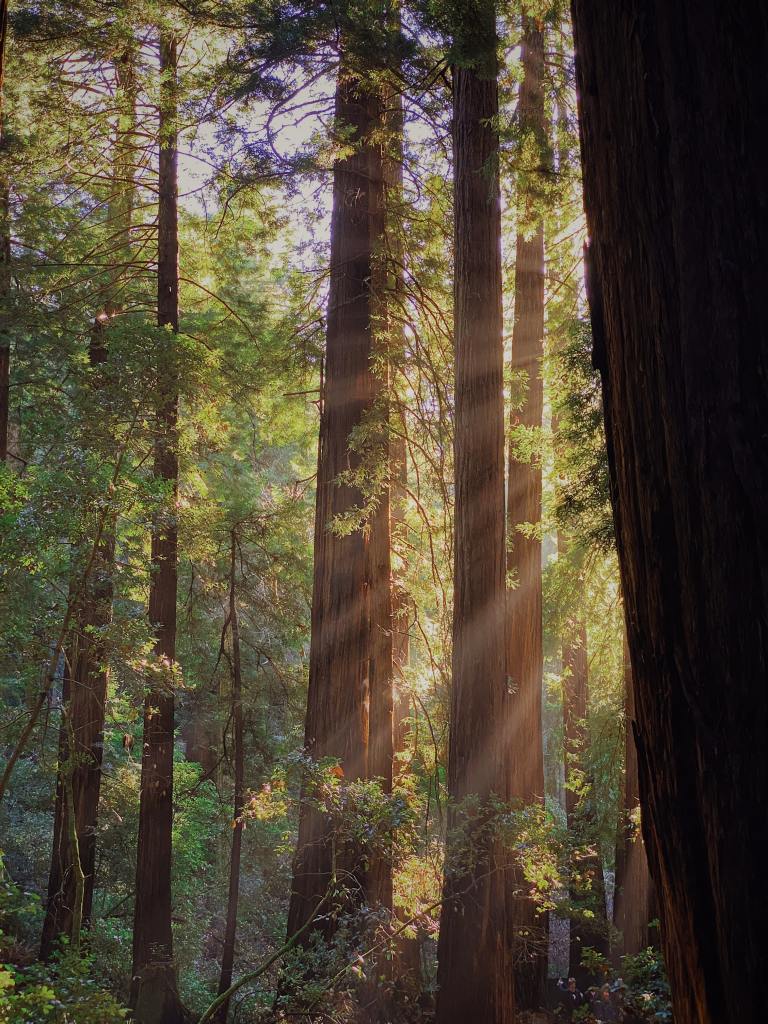
Moving along paths that meander through a sequoia forest, I delight in the nourishment the space offers to my senses. Feeling the clay earth beneath my feet, softened with newly fallen leaves and branches, echoes of a recent storm. Hearing the gentle whisper of water flowing in a nearby stream. Receiving cool, damp air into my lungs, laden with the fragrance of life renewing itself on the forest floor. Relishing in the colors and contrast that fill the space: emerald moss blanketing rock faces; amber oak leaves and auburn sequoia needles underfoot, the bright jade of new growth extending from branch tips, not yet darkened by the seasons; and inky shadows tucked into the pleats of tree trunks.

Navigating the forest floor, I cast my attention from the smooth crest of a new fern unfolding from the soil to the towering canopy of trees hundreds of years of age. I listen for lessons of arboreal resilience. 

Burls and Wounding

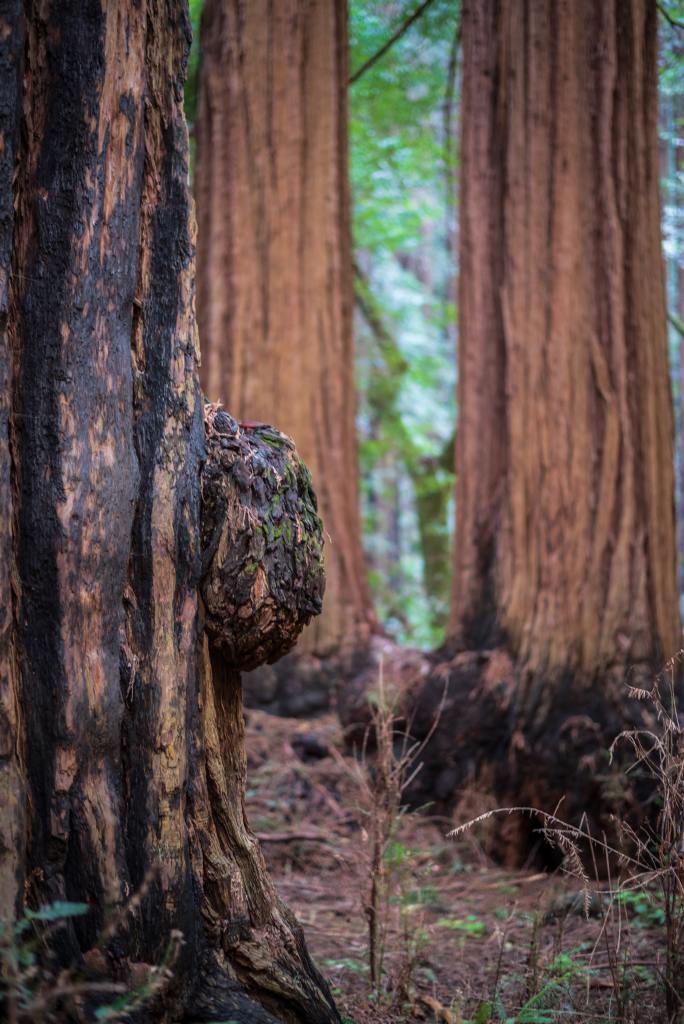
When a tree has been wounded, when a branch is cut or the trunk damaged, the tree adopts a new pattern of growth around that space. The burl that grows in swirls and lumps is a wood stronger than that of the rest of the tree. In enveloping its wounding, a tree finds a new strength.

How might we learn from the wisdom of burls? How does this wisdom live in us?

When we experience wounding, physical or emotional, we develop new patterns of protection around the space of injury. In the case of a physical wound, our cells coordinate to promote repair. When a bone has broken and is supported to heal, it knits itself back together and that area of bone becomes denser, stronger than it was before. In the case of emotional injury, we develop adaptive mechanisms to navigate and protect ourselves from the harmful dynamic. These mechanisms are myriad and may look like heightened sensitivity to the body language of others to detect potential threat, difficulty trusting others and/or oneself, or disconnection from one’s internal landscape because that space has been filled with too much pain. These processes occur through the innate wisdom of our somas to enable our survival. Such adaptive mechanisms may be helpful for immediate survive, however over time they may deepen into patterns that become harmful to ourselves and people in our lives.

To facilitate healing, conditions must be created in which repair and transformation can take place. If a bone is broken, to heal the physicality of the injury, it is most supportive to set the injury in a cast so the body can be undisturbed as the wound mends. Creating a supportive and nurturing environment in which we can address and transform wounding in our somas is a more complex endeavor.

Perhaps people in our lives are unwilling to create space for or recognize our healing. Perhaps the wound is too raw or too deep, and more time is needed before we are ready to engage in healing work. Perhaps the layers of stress in our lives are currently too numerous and too heavy such that our resources must be allocated toward making it through each day, not delving into wounds we carry. If external and internal conditions arranged in a way that devoting effort toward healing is possible, staying steady on a healing path is an arduous practice in itself. The self-protective patterns we have developed and no longer serve us are powerful, they may be the only way in which we have come to know safety. The journey of healing is one of spiral form, a circling path. With slight adjustments in each rotation, we gain new perspective and train new helpful patterns of being within ourselves and with others. 

Through our experiences of wounding and healing, how might we attend our spaces of wounding in such a way that, like a burl grows on a tree, envelopes the injury with care? How can we engage in our healing in a way that does not attempt to resolve or erase our experiences of injury, but enfolds them with strength and adaptive patterns of growth? How might we nurture slow, steady, spiraling integration of our wounds as parts of our beings?   

Navigating Loss in Collectivity

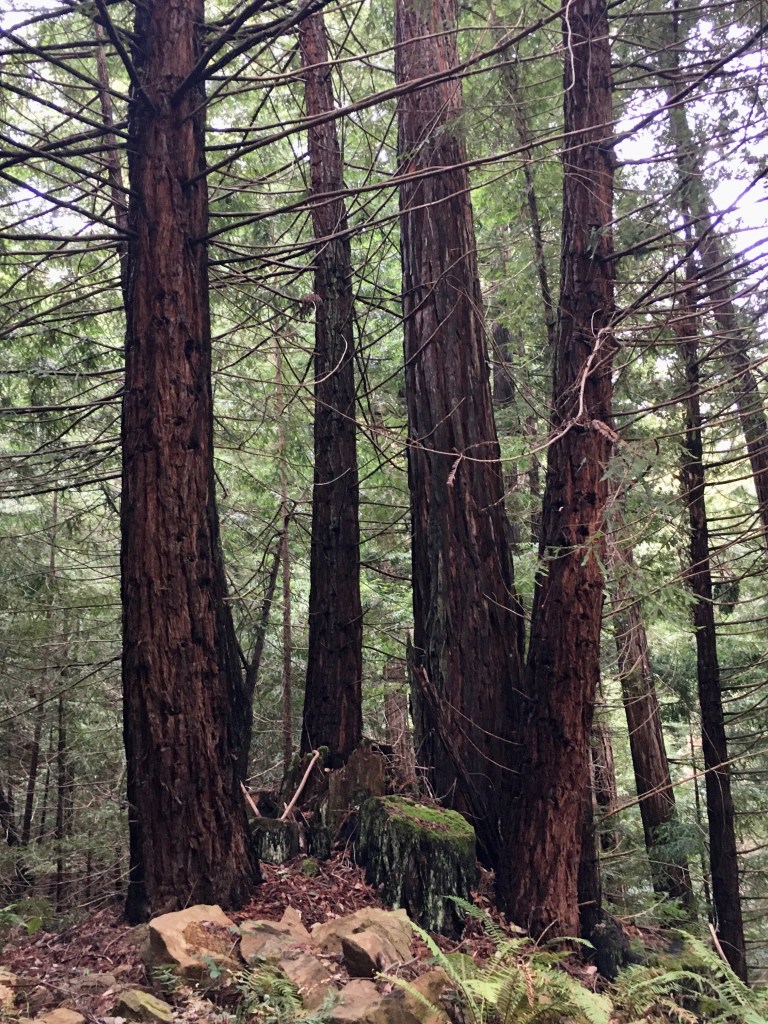
The growth of a sequoia is one of encircling community. This is particularly pronounced when an elder tree has been felled. Around the severed trunk, new trees sprout forth. The loss of the mother tree creates space for new growth, not just of one new stalk, but many.

What might we learn from the wisdom of encircling community? How does this wisdom live in us?

The emergence of encircling community in the wake of loss is reflective of our individual and collective responses through grief. In teaching about the nervous system, our primary responses to threat are often named as: fight, flight, freeze, and fawn. A fifth response exists that is less commonly named: flock. In the shadow of the loss of a loved one or a large-scale disaster, as humans we find solace and shelter in community. Our coming together, at wakes, funerals, and through other forms of ritual, creates spaces where we can be supported ourselves and support others. As a collective gathered in shared grief, we find resonance in the emotional experience of those around us. Such rituals allow us individually and collectively to begin to integrate the deep heart wound that is the loss of a loved one.

The importance of gathering in the wake of loss has been brought into sharp relief particularly during these difficult months of isolation due to the COVID-19 pandemic. Too many lives have been lost, most of whom have passed away alone, unaccompanied by their loved ones. For the family members, friends, and communities who survive, they are unable to gather in their grief, to come around one another. The healing journey through grief is thwarted, as the rituals we turn to are no longer safe or permitted.

The COVID-19 pandemic has wrought immeasurable pain for millions of people. So too has it illuminated strength in and of community. Through seasons of self-isolation and physical distancing, mutual aid networks emerged and strengthened. In response to the threat of COVID-19, exacerbated through social structures that place black and brown bodied people and impoverished people at particular risk, communities find protection and support through coming together. Communities have mobilized in care to ensure community members’ needs would be met, particularly those most vulnerable.

Through our navigation of trauma and potentially traumatic events, how can we find support in community? Whereas trauma isolates, fragments, and disconnects, how can we nurture spaces and communities of care to extend support to one another, particular our members who are suffering? In a society that praises individualism and discourages vulnerability, how can we be radical in our collectivities and the authenticity of our communication of how we are (when it is safe to do so)? How can we engage in healing processes that help us re-member ourselves, individually and collectively?

Discerning Inspiration

Through the process of photosynthesis, trees and other plants absorb light, water, and carbon dioxide, transforming these elements into oxygen and chemical energy that is stored in the plant for food. This chemical energy is stored in the form of carbohydrates, contributing to the cellular structure of the plant. It is in absorbing light, water, and carbon dioxide from the external environment, a discerning inspiration, that trees and plants are given the necessary energy to grow.

What might we learn from the wisdom of the discerning inspiration of photosynthesis? How does this wisdom live in us?

We are shaped by the environments in which we are raised and the environments in which we live. This includes factors such as our familial culture, dominant societal culture, epigenetics (the way in which our ancestral history lives in our bodies), the physicality of our environment, and many more. As we navigate through life, there are factors influencing us about which we are aware to varying degrees. The extent of our awareness is often reflective of our societal positioning. The nature of privilege and oppression is that they obscure the very structures by which they operate and suppress a questioning of these structures by those who benefit most from their existence.

In the United States, a powerful factor that shapes the social, political, and economic environment is that of white-body supremacy. This form of violence, which, as Resmaa Menakem shares, is not a question a race, but a question of belonging in humanity, weaves through the structures and relationships that constitute this country. To the extent that it is part of the environment in which we live, without an awareness of how white-body supremacy works on us and through us, we continue to inhale and enact the values and practices it upholds.

Through increased awareness of the factors that shape our environment, and thus shape us (such as white-body supremacy), we can become more discerning about what we absorb and integrate into our somas. In photosynthesis, a plant does not absorb every element in its environment – it absorbs that which it can integrate and will support its growth. How might we invite the same discernment in that which we absorb and integrate into our beings? How might we recognize what in our environment nurtures our growth and what impede connection and perpetuate harm? How might we be discerning about what we have absorbed, integrating only that which nourishes our individual and collective flourishing, and expelling that which does not serve us?

On Arboreal Resilience

Opening to the wisdom of the trees, the teachings of arboreal resilience are many. As we are of nature, this wisdom is inherent within us as well. May we look to the world around us for guidance to remember the depth of knowing we hold within our individual and collective bodies.

Arboreal resilience reminds us how we can tend to our wounds with patience and strength.

Arboreal resilience reminds us how we can and do turn to one another to navigate through moments of difficulty, of loss and of disaster.

Arboreal resilience reminds us that we can be discerning about how we are shaped by the world we inhabit.

Arboreal resilience reminds us that this knowing is not a construct of the mind, but a wisdom held in the fiber of our beings.

May these reminders support us in co-creating a world that centers healing, community, and belonging.

tend arboreal

resilience. adaptive

growth, patient and strong.


References

adrienne maree brown, Emergent Strategy: Shaping Change, Changing Worlds

Paulo Freire, Pedagogy of the Oppressed

Resmaa Menakem, My Grandmother’s Hands: Racialized Trauma and the Pathway to Mending Our Hearts and Bodies

© 2021 All Rights Reserved